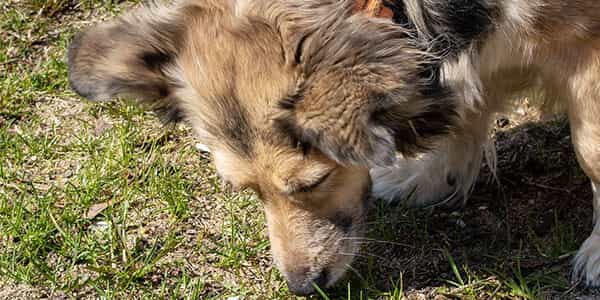
When your dog is exploring the yard, it’s natural for them to sniff and taste everything — including mushrooms. But not all mushrooms are safe. Out of 11,000 species of mushrooms in North America about 30 are very poisonous to dogs.1 These poisonous mushrooms grow throughout the continent, especially in the wetter areas of the Pacific Northwest, California, and the Northeast.2 This means it’s highly possible your dog may encounter a dangerous mushroom, even in your own yard. Do you know what to do if this happens? A first step should be contacting your veterinarian.
Poisonous Mushroom in North America
It can be extremely tricky to distinguish a safe mushroom from a poisonous one, so it’s best to assume all wild and yard mushrooms are toxic. Dogs are particularly at risk for eating poisonous mushrooms since some give off a fishy odor that attracts them.
Here are some of the mushrooms in North America that are poisonous to dogs:1,2,3,4
- Amanita muscaria – Deadly Agaric, Fly Agaric
- Amanita virosa – Destroying Angel
- Amanita phalloides – Death Cap
- Galernia marginata – Deadly Galerina, Autumn Skullcap
- Cortinarius rubellus – Deadly Webcap
- Gyromita sp. – False Morel
- Amanita gemmata – Jeweled Deathcap
- Inocybe sp. – Deadly Fibrecap
- Clitocybe dealbata. – Ivory Funnel
- Amanita pantherinoides– Western Panther Amanita
- Scleroderma sp. – Common Earthball
Signs of Mushroom Poisoning in Dogs
If your dog eats a toxic mushroom, the signs will vary depending on the type of mushroom. Some mushrooms may cause illness within 30 minutes, but others may not cause any signs for six to 12 hours. If your dog has any health issues, they can have a more serious reaction.
These are some of the signs you may see if your dog eats a toxic mushroom:
- Vomiting
- Diarrhea
- Drooling
- Difficulty walking
- Difficulty breathing
- Agitation
- Tremors
- Seizures
- Coma
- An increase in drinking and urination, followed by a decrease in both
- Acute kidney failure
- Acute liver failure
What to Do If Your Dog Eats a Mushroom from the Yard
If you think your dog may have eaten a mushroom, contact your veterinarian or emergency veterinary clinic immediately.
Here’s what to do:
- Take a photo of the mushroom and note where it was found.
- Call your vet or an emergency clinic and describe what happened.
- Do not wait for symptoms to appear — fast action is critical.
- If no vet is open, call: Pet Poison Helpline or ASPCA Animal Poison Control (both charge a small fee).
If possible, bring a sample or the entire mushroom in a sealed bag for identification. Your vet may also consult with the North American Mycological Association (NAMA), which offers free expert identification and tracks mushroom poisoning cases in pets.
Treatment depends on when your dog ate the mushroom and which kind it was. Dogs who are already showing signs of poisoning may need intensive care and hospitalization.
When and Where Mushrooms Grow
A mushroom we see above ground is actually the fruiting body of a mushroom that lives underground, waiting for environmental conditions to be just right to send up its fruit with spores. Mushrooms can survive underground for years if the weather is dry. They like to sprout in the warmer, humid months from spring to fall.
Mushrooms enjoy a watered lawn. A yard with poor drainage or one that is overwatered will have more mushrooms. They also like undisturbed areas with leaves, stumps, and decaying organic matter.
How to Remove Yard Mushrooms
Since it’s difficult to tell which mushrooms are harmless or poisonous, it’s best to wear a glove and pull up any mushrooms in your yard as they appear. Removing mushrooms immediately also prevents them from releasing spores, which causes more mushrooms to grow in the future.
Place them in a sealed bag in a trash can your dog can’t get into.
It’s not a good idea to run over mushrooms with a lawn mower. Small mushroom pieces can be left behind and be eaten by your dog.
Remember that mushrooms can also grow in parks, hiking trails, or any outdoor area with the right environment. Dogs love to keep their noses to the ground, so during warmer, humid seasons, keep your eyes peeled for mushrooms and on your dog when you’re away from home.
Mushrooms may seem harmless, but for dogs, even a small nibble can be deadly. Because toxic and non-toxic mushrooms can look identical, it’s safest to treat all wild mushrooms as dangerous.
ZPC-05251

- My Dog Ate a Mushroom in the Grass. Should I be Concerned. Pet Poison Helpline. https://www.petpoisonhelpline.com/pet-tips/my-dog-ate-a-mushroom-in-the-grass-should-i-be-concerned/. Accessed April 29, 2024.
- Mushroom Poisoning in Dogs. ASPCA. https://www.aspcapro.org/resource/mushroom-poisoning-dogs. Accessed April 29, 2024.
- Mushroom Toxicity in Dogs. UC Davis Veterinary Medicine. https://healthtopics.vetmed.ucdavis.edu/health-topics/mushroom-toxicity-dogs. Accessed April 30, 2024.
- Mushroom Poisoning in Dogs and Cats. North American Mycological Association. https://namyco.org/interests/toxicology/mushroom-poisonings-in-dogs-and-cats/. Accessed April 30, 2024.