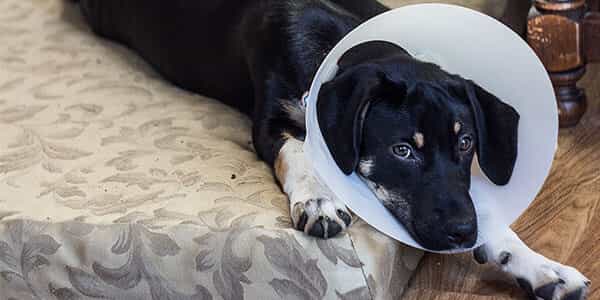
If you share your home with a dog or cat, chances are you’ll need to care for a surgical incision at some point in their life. Whether it’s from a spay or neuter, lump removal, or fracture repair, proper incision care helps your pet heal safely and comfortably.
Incision care is an important part of the healing process. Let’s look at the different types of incision closures and how to care for each one.
What Are Surgical Incisions?
A surgical incision is a cut made in your pet’s body tissue during a procedure. Some incisions are shallow, like you'd see with the removal of a small mass from the skin. Others are much deeper, going through layers of subcutaneous fat, fascia, and muscle. If the incision is deep enough that it won't heal on its own, it needs to be closed.
How Are Incisions Closed?
Veterinarians’ close incisions using staples, stitches, surgical glue, or sometimes a combination of these methods.
- Sutures (stitches and staples) hold the edges of the incision together.
- Internal sutures are placed under the skin and dissolve over time.
- External sutures or staples are visible on the surface and usually need to be removed once the incision heals.
The type of closure depends on the incision’s size and location, skin tension, and your veterinarian’s preference. The type of closure (both material and whether internal sutures are needed) depends on several factors:
- Size and location of the incision
- Amount of tension (tightness of the skin) at the surgical site
- The surgeon’s preference
Types of Incision Closures (Sutures)
Staples
Staples are small metal fasteners that hold the edges of your dog or cat’s skin together while the underlying tissue heals. They’re strong and quick for a veterinarian to place, often used in areas where there is minimal tension on the skin and when rapid closure is needed.
Stitches
When the skin edges are sewn together using a special needle and thread, it’s called “stitches” (since it’s similar to stitching two pieces of fabric together).
Dog stiches and cat stitches that are placed in the skin (where you can see them) generally need to be removed by your veterinarian once the incision has healed. If the stitches are made from an absorbable material, such as those used under the skin, they will dissolve naturally.
Surgical Glue
Surgical glue is a special medical adhesive applied to the surface of the skin to bond the incision edges together. It’s used to close small incisions or to help reinforce larger ones that may also have stitches or staples. As the incision heals, the glue is designed to naturally slough off your pet’s skin. No vet removal is needed.
Caring for Your Pet’s Surgical Incisions
Your veterinarian or surgeon will show you your pet’s incision site and provide you with detailed care instructions. Follow all the instructions exactly to give your pet the best chance to heal without complications.
Supplies Needed
Have these supplies and set-ups ready before you bring your pet home from their procedure:
- Elizabethan collar (cone) or recovery suit
- Clean bedding
- A confined resting area to limit your pet’s activity
- A supply of any prescribed medications from your veterinarian
General Incision Care
Regardless of the method used to close your pet’s incision, and whether you have a dog or a cat, you should:
- Restrict activity for 10 to 14 days — no running, jumping, or playing.
- Keep the incision site clean and dry for 10 to 14 days.
- Check the incision site two to three times daily for redness, swelling, or discharge, if not covered by a bandage.
- Not apply anything to the incision site, such as creams, ointments, or lotions, unless told to do so by your veterinarian.
- Not use hydrogen peroxide or alcohol on the incision, as they can impede the healing process.
- Not let your pet or other pets lick, chew, scratch, or rub at the incision site.
Caring for Staples
If your dog or cat has staples, check the site twice a day to ensure none are missing, bent, turned upside down, or pulled out of the skin.
Staples are usually removed in 10 to 14 days. It’s a very quick procedure at your veterinary clinic and does not require sedation or numbing the area.
Caring for Stitches
Whether you’re dealing with dog stitches or cat stitches, check them daily. Make sure that none are missing, loose, or so tight that they’re stretching or tearing the skin.
If you can’t see the stitches, they’re likely the kind that dissolve — no removal needed. Your vet may just want to recheck the incision site to ensure it’s healing before the stitches start to dissolve.
For stitches that need removal, it’s usually done 10 to 14 days after the surgery. This can vary depending on the type of surgery. It’s a simple procedure that does not require sedation.
Caring for Glue
With incision glue, it’s vital to keep the area completely dry. If the glue gets wet, it will loosen and come off prematurely. This may delay healing of the incision. Talk with your vet if you’re concerned that your pet’s daily activities (which should be limited during this time) or desire to lick may get the glue wet. This type of closure does not need to be removed by your vet, but they will probably want to check the incision to see how it’s healing.
What to Watch for as Your Pet’s Incision Heals
It is very important to seek immediate veterinary care if you notice any of the following when checking your pet’s surgical site:
- Any part of the incision is open
- Excessive swelling, redness, or bruising
- Severe bleeding
- Thick or foul-smelling discharge
- You notice the incision is abnormally warm or hot
- Signs of severe pain
- Lethargic and not eating for more than 48 hours
- Fever
- Persistent vomiting and/or diarrhea
- Inability to pee or poop
- Difficulty breathing
If you notice concerning changes to the incision site, take pictures of the area to show your veterinarian and schedule as follow-up visit as soon as possible. Some vet clinics provide telehealth or give you instructions over the phone, so a visit to the clinic might not be needed.
ZPC-05226