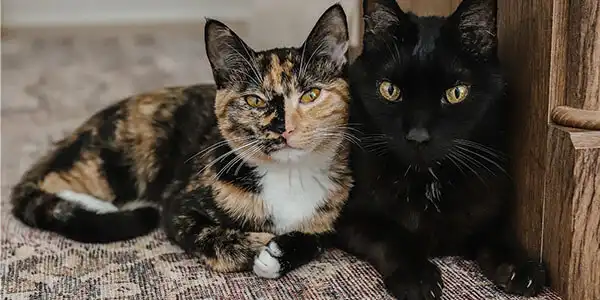
Whether you have a pure-bred or mixed-breed cat, understanding genetic disorders can help you take better care of them. Some breeds are more prone to certain inherited conditions, and knowing what to watch for can help you and your veterinarian take early action.
To get you started, here are some of the more common genetic disorders in cats and the breeds they most commonly affect.
Feline Lower Urinary Tract Disease
Feline lower urinary tract disease (FLUTD), also known as feline urological syndrome (FUS), is a broad term used to describe a variety of conditions that affect your cat’s lower urinary tract (the bladder and urethra). These include:
- Urinary tract infections
- Bladder crystals and stones
- Urethral stones
- Feline idiopathic cystitis (FIC)
Cats of any age, gender, and breed can be affected by FLUTD. Most people think the most common cause is a urinary tract infection, but it is not the most common. The most common cause is feline idiopathic cystitis, a complex condition with an unknown cause itself, though stress is believed to be a factor.1,2
Other causes of FLUTD include:
- Anatomical defects of the urethra
- Bacterial urinary tract infections (usually found in older cats with underlying medical issues, such as kidney disease, diabetes, or hyperthyroidism)
- Bladder neoplasia (cancer)
- Urethral plugs
- Urolithiasis (bladder stones)
Signs of FLUTD
If your cat has an FLUTD condition, you may see:
- Blood in the urine
- Crying out while urinating
- Licking the genital area
- Straining in the litter box
- Urinating in small amounts frequently
- Urinating outside the litter box
- Trying to pee, but nothing comes out
Treatment for FLUTD
Treatment will depend on the underlying cause, and may include:
- Managing diet-frequently a prescription diet from a veterinarian
- Stress management
- Environmental modifications
- Medications
- Surgery (for bladder stones)
Breeds Prone to FLUTD
There are three breeds more likely to have FLUTD, though any breed or mix can be affected.
Feline Diabetes Mellitus
Diabetes mellitus is the second most common endocrine disorder in cats.2 This chronic disease occurs when your cat’s body doesn’t produce enough insulin (type 1) or the insulin produced can’t be properly used (type 2). This results in high blood sugar, known as hyperglycemia. Type 2 is much more common at 85 to 95% of cases.3
Some cats have higher risk factors, including:
- Age. The average age of diagnosis is 10.
- Neutering. Neutered cats are almost twice as likely to develop diabetes.
- Gender. Males have 1½ times the risk.
- Obesity. Obesity can cause insulin resistance and pancreatic beta-cell dysfunction.1
Signs of Diabetes Mellitus
If your cat has diabetes mellitus, you may see increased appetite, thirst, and urination, as well as weight loss.
Treatment for Diabetes Mellitus
Once confirmed through diagnostic testing, treatment includes insulin injections or, or some cats, oral medications. Weight management, diet, and other tactics may also be used, along with routine monitoring.
Breeds Prone to Diabetes Mellitus
Cat breeds predisposed to diabetes mellitus include:
- Russian Blue
Lymphoplasmacytic Gingivostomatitis
Lymphoplasmacytic gingivostomatitis, also known as feline chronic gingivostomatitis, is a painful dental disease that causes extensive inflammation of a cat’s mouth.
With this condition, your cat’s immune system has an inappropriate response to triggers, such as:
- Dental plaque bacteria
- The presence of microorganisms that can cause disease, such as bacteria like Bartonella or viruses like FIV, FeLV, or herpesvirus
Signs of Lymphoplasmacytic Gingivitis
If your cat has lymphoplasmacytic gingivostomatitis, you may see the following signs:
- Bad breath
- Dropping food
- Preference for canned food over dry food due to pain when chewing
- Lack of appetite
- Swollen, ulcerated, bleeding gums
- Signs of pain when chewing, yawning, or opening their mouth
- Excessive salivation
- Blood in the saliva
- Pawing at the mouth
- Weight loss due to pain when eating
- Hiding or reclusive behavior
Treatment for Lymphoplasmacytic Gingivitis
Unfortunately, there is no single treatment that works well because there are many potential causes. Getting to the root of the problem can help guide treatment, which may include immunosuppressive, immunomodulatory, and pain medications, antibiotics, laser therapy, and supplements.
Surgery may be recommended to remove some or all of your cat’s teeth.
Breeds Prone to Lymphoplasmacytic Gingivitis
Cat breeds predisposed to lymphoplasmacytic gingivostomatitis include:
- Abyssinian
Feline Atopic Skin Syndrome
Feline atopic skin syndrome (FASS), is a subset of feline atopic syndrome (FAS), a term that broadly includes feline allergic skin disease, food allergy, and/or asthma. FASS refers specifically to allergic skin disease caused by environmental allergens.6
FASS is one of the most prevalent skin diseases in cats.6 It’s caused by a hypersensitivity reaction of the skin, triggered by environmental allergens, such as dust mites, mold, pollen, and food.
Signs of Feline Atopic Skin Syndrome
If your cat has feline atopic skin syndrome, you may see:
- Eosinophilic granuloma complex. This can look like raised, itchy, ulcerated lesions (called eosinophilic plaques), firm, raised nodules (called granuloma), or red, crusted ulcers, typically on the neck or upper lip (called indolent ulcer).
- Head and neck itchiness. This may cause excessive grooming, rubbing, or scratching.
- Miliary dermatitis. A collection of small, crusted bumps or lesions around the neck.
- Hair loss. Such loss can come from overgrooming the belly, sides, or legs.
Treatment for Feline Atopic Skin Syndrome
Once confirmed through diagnostic testing, treatment for feline atopic skin syndrome may include:
- Antibiotics
- Antihistamines
- Immunotherapy
- Immunosuppressants
- Medicated shampoos
- Medicated sprays or wipes
- Prescription diets
- Supplements
There are things you can do to help avoid flare-ups, like:
- Avoiding known triggers
- Strengthening your cat’s immune system with a balanced diet, exercise, lowering stress, and staying current on vaccines
- Regularly removing allergens from your cat’s body using wipes or bathing
- Washing bedding regularly and using dust mite covers
- Using air conditioning instead of opening windows (if possible)
- Using air purifiers
- Avoiding stuffed toys that may hold dust mites
- Vacuuming and dusting daily
- Using veterinary-approved flea and tick prevention year-round
- Supplementing with omega-3 fatty acids
Breeds Prone to Feline Atopic Skin Syndrome
There are a few cat breeds predisposed to feline atopic syndrome, including:
- Abyssinian
- Persian
- Siamese8
Now you’ve got another set of tools in your feline care toolkit. You can use this information to start a preventative dialog with your veterinarian, especially if you have one of the breeds referenced above. Knowing a bit about these common genetic disorders in cats helps set you and your cat up for a long, happy life together.

ZPC-05259

- Factors Related to the Occurrence of Feline Lower Urinary Tract Disease (FLUTD) in Salvador, Bahia, Brazil. Veterinary Information Network. https://www.vin.com/apputil/content/defaultadv1.aspx?pId=11290&catId=33324&id=4252806. Accessed September 10, 2025.
- Diabetes mellitus in cats: Risk factors and treatment. DVM360. https://www.dvm360.com/view/diabetes-mellitus-cats-risk-factors-and-treatment-proceedings. Accessed September 10, 2025.
- Diabetes Mellitus in Cats: Overview. VCA Animal Hospitals. https://vcahospitals.com/know-your-pet/diabetes-mellitus-in-cats-overview. Accessed September 10, 2025.
- O'Neill DG, Gostelow R, Orme C, Church DB, Niessen SJ, Verheyen K, Brodbelt DC. Epidemiology of Diabetes Mellitus among 193,435 Cats Attending Primary-Care Veterinary Practices in England. J Vet Intern Med. 2016 Jul;30(4):964-72. doi: 10.1111/jvim.14365. Epub 2016 Jun 29. PMID: 27353396; PMCID: PMC5094533.
- Juvenile Gingivitis in Cats: A Veterinary Clinical Guide. International Veterinary Dentistry Institute. https://veterinarydentistry.net/juvenile-gingivitis-cats/. Accessed September 10, 2025.
- Feline Atopic Skin Syndrome. Today’s Veterinary Practice. https://todaysveterinarypractice.com/dermatology/feline-atopic-skin-syndrome/. Accessed September 10, 2025.
- Ravens PA, Xu BJ, Vogelnest LJ. Feline atopic dermatitis: a retrospective study of 45 cases (2001-2012). Vet Dermatol. 2014 Apr;25(2):95-102, e27-8. doi: 10.1111/vde.12109. Epub 2014 Mar 5. PMID: 24597491.
- Does my cat have environmental allergies (atopy, now called feline atopic skin syndrome-FASS)?. Veterinary Allergy and Dermatology Inc. https://www.purrfectpet.com/does-my-cat-have-environmental-allergies-atopy-now-called-feline-atopic-skin-syndrome-fass/. Accessed September 10, 2025.