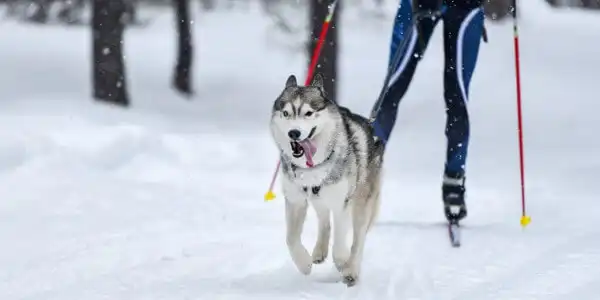
Are you looking for a unique way to enjoy winter with your dog? Dog skijoring is a fun winter activity that brings together skiing, teamwork, and bonding time in the great outdoors. If you want a new adventure for you and your dog, this sport might be the perfect fit.
What is Dog Skijoring?
Skijoring is from the Norwegian word skikjøring, which means “ski driving.” Long used as a form of transport throughout Scandinavia, a skier is pulled along the snow by reindeer, horses, and yes, even dogs. Dog skijoring is typically done with one or two dogs pulling the skier behind them.
Dog skijoring is a perfect combination of skiing, sledding, and trail running for you and your dog. Popularity of the sport has grown, and more dog owners are signing up for classes and even participating in competitions to test their dog’s skills and speed (as well as their own).
Just like sled-pulling, dog skijoring uses cues to tell the dog when to speed up, slow down, and turn. To get started with your dog, you’ll first want a foundation in cross-country skiing yourself. The more confident you are on skis, the safer it will be introducing your dog to skijoring.
What Types of Dogs Do Well with Skijoring?
While you may think that skijoring is just for the “Northern” dog breeds bred to pull, like Huskies, Malamutes, and Samoyeds, it’s a sport that almost any dog can do. Active dog breeds and mixes excel in the sport, from German Shorthaired Pointers to Greyhounds to Labrador Retrievers and more. It all comes down to their desire to pull and run.
Smaller dogs can get in on the snowy fun — although don’t expect them to pull. For smaller dogs, be ready to provide the power yourself, and have your dog running alongside on a leash.
If you’re considering trying skijoring with your dog, the first thing you’ll want to do is check with your veterinarian that your dog is healthy and that they are old enough. It’s important that your dog’s bones and joints are fully grown before getting involved in a pulling sport. This helps reduce the risk of hip dysplasia, growth abnormalities, and other injuries. Dogs are considered full-grown usually between 18 months and two years of age, depending on their size and breed. You’ll also want to check with your veterinarian to make sure your dog is in good enough shape. If your dog has not been exercising much, you may need to put them on a gradual training program.
Remember that you’ll be in the snow, so consider whether your dog tolerates colder weather well. The shorter the dog, the closer to the cold ground they are. And the shorter their fur, the less protection they have against the sustained cold.
Dog Breed Suitability
| Breed | Typical Weight | Coat Type | Skijoring Suitability | Notes |
|---|---|---|---|---|
| Siberian Husky | 35–60 lbs | Double | ★★★★★ | Natural pullers, love cold |
| Labrador Retriever | 55–80 lbs | Short/Thick | ★★★★☆ | Athletic, enjoy snow |
| Border Collie | 30–45 lbs | Medium/Long | ★★★☆☆ | Need training, high energy |
| Samoyed | 45–65 lbs | Thick/Long | ★★★★★ | Cold weather, loves pulling |
| German Shorthaired Pointer | 50–70 lbs | Short | ★★★★☆ | Fast, energetic, needs jacket |
Dog Skijoring Equipment You’ll Need
To keep you and your dog safe and comfortable, gather the right dog skijoring equipment before heading out:
- Cross-country skis. Avoid metal edges, which could hurt your dog if they get too close.
- Warm winter clothing. Dress in layers so you stay warm and dry.
- Skijoring belt. This waistband attaches you to your dog’s lead and allows for safe pulling.
- Skijoring harness. Your dog needs a harness made for pulling sports. These are longer and padded to protect your dog’s body.
- Skijoring bungee line. The lead should be at least nine feet long and slightly stretchy to give both of you room to move. Look for a quick-release option for safety.
- Warm dog jacket. Dogs with short or single coats need extra warmth.
- Dog boots or paw wax. Protect your dog’s paws from ice, snow, and cold. Use paw wax or booties as needed.
- Water. Bring enough water for you and your dog, and take breaks to hydrate.
- Poop bags. Always clean up after your dog.
- Doggie first aid kit. It’s smart to have first aid supplies on hand. Check out tips on pet first aid and be prepared with a first aid checklist.
- Dog sunscreen. Snow reflects sunlight, so put safe sunscreen on your dog’s nose and other exposed areas.
Safety Tips for Skijoring with Your Dog
Keep these safety tips in mind for a positive experience:
- Make sure your dog is well-conditioned before starting the season.
- Choose quiet, less crowded trails so your dog can focus.
- Watch your dog closely for signs of fatigue, like slowing down, heavy panting, or a sudden drop in energy.
- Check for signs of hypothermia (shivering, lethargy, shallow breathing) and frostbite (pale, gray, or blue skin, especially on paws, ears, and tail).
- If your dog is new to this activity, start with short sessions and gradually increase the distance.
Warm Up and Cool Down with Your Dog
Before starting your skijoring activity, be sure to warm your dog up for at least 5 to 10 minutes. The first part of the warm-up is cardio exercise (such as walking) followed by active stretching (front and hind leg, neck, and back). This primes the cardiovascular system and the muscles to perform.
Cooling down is just as important and should be done after every session. Walk for about 5 to 10 minutes and lightly stretch the major muscle groups (hips, shoulders, back). Cooling down helps to normalize your dog’s heart rate and improve muscle recovery.
Dog skijoring is a wonderful way to make the most of winter, keep your dog active, and strengthen your bond. With the right dog skijoring equipment and safety tips, you’ll both have a blast exploring snowy trails.
ZPC-02508R1