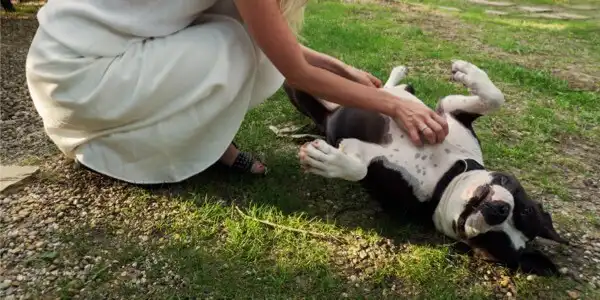
Whether you’re a nature lover or not, you’ve probably heard the saying “leaves of three, leave them be” to help you identify and avoid poison ivy (Toxicodendron radicans). Unfortunately, dogs can’t rhyme or count, so it can be hard for them to know to stay away from it.
But can dogs get poison ivy (and what should you do if they do)? Knowing the risks and what signs to watch for can help you keep your pet happy and healthy.
Can Dogs Get Poison Ivy
The answer is yes, but it’s not very common. Most dogs have thick fur that helps protect their skin from direct contact with poison ivy sap, which contains a compound called urushiol. This compound is what causes the itchy rash in both people and pets. However, some dogs are more at risk:
- Breeds with less fur (like the Chinese Crested) have more exposed skin, making it easier for urushiol to reach their skin.
- Dogs that are low to the ground (such as French Bulldogs) might brush their bellies against poison ivy.
- Active dogs that hike, hunt, or play outdoors (like Labradors and Pointers) have more chances to come into contact with the plant.
Symptoms of Poison Ivy in Dogs
Poison ivy is only considered mildly toxic to pets, whether exposure is via skin or orally.1 If your dog consumes it, poison ivy can cause gastrointestinal irritation resulting in vomiting and diarrhea. Call your veterinarian if you think your dog has consumed poison ivy.
When the urushiol in the plant’s sap makes contact with the skin, you may notice the following symptoms:
- Redness
- Swelling
- Itching
- Rash
- Blisters
| Time After Exposure | Skin Symptoms | GI Symptoms | What to Do |
| 0-6 hours | Redness, mild itch | None | Bathe dog, wear gloves |
| 6-24 hours | Rash, swelling | Drooling, vomiting | Call vet if severe |
| 1-3 days | Blisters, oozing | Diarrhea | Monitor, vet for infection |
How to Treat Poison Ivy on Dogs
If you think your dog has been exposed to poison ivy, you should give them a bath as soon as possible. Be careful handling them and be sure to wear gloves. The oils left on the fur can be transferred to you, resulting in your own miserable, itchy rash.
If you notice the symptoms above associated with skin contact, it’s best to have your dog evaluated by a veterinarian. Since it’s uncommon for dogs to get poison ivy, they may have a different underlying medical condition, such as skin mites, allergies, or another type of contact dermatitis that causes similar symptoms.
If your veterinarian confirms that your dog’s skin rash is due to poison ivy, they may prescribe steroids (topical steroids, other prescription medication for dog's itchiness, oral, and/or injectable), antibiotics, topical ointments, and/or medicated shampoo. The treatment aims to manage your dog’s itchiness, prevent self-trauma (scratching and chewing the skin), and prevent secondary bacterial skin infections.
How to Prevent Poison Ivy in Dogs
The best way to avoid poison ivy problems is prevention. Here are some tips:
- Learn to spot poison ivy: Look for clusters of three leaves, with the center leaf usually larger. The edges can be smooth or notched.
- Avoid risky areas: Poison ivy grows along riverbanks, roadsides, fields, wooded areas, and sometimes even in gardens.
- Bring supplies: Carry gloves, cleaning wipes, and a baggie when walking in areas where poison ivy grows. If your dog touches the plant, wipe them off and throw the wipe away carefully.
- Bathe after outdoor adventures: Even if you’re careful, it’s smart to bathe your dog after walks or hikes in areas where poison ivy is common.
By learning how to spot poison ivy, giving quick baths, and talking to your veterinarian if you see any concerning signs, you can keep your dog safe and happy all year round.

ZPC-02520R1

- Poison Ivy. Pet Poison Helpline. https://www.petpoisonhelpline.com/poison/poison-ivy/. Accessed September 28, 2022.