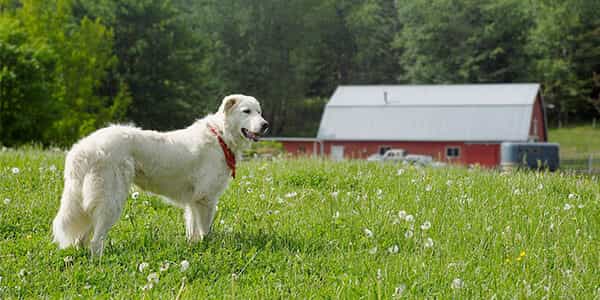
Known for their quick thinking and intelligence, herding dogs are often a favorite breed type for people with active lifestyles.
These dogs are more than just fast learners with lots of energy. They were developed for a specific job: controlling and moving livestock (often in close collaboration with humans). That purpose has shaped everything from how they move and think to how they interact with people and other animals.
What Is a Herding Dog?
Herding dogs were bred to gather, move, and manage livestock, like sheep, cattle, and goats. They’re known for being highly trainable, extremely aware of movement, hard-working, focused, sensitive to their handler’s cues, and quick to learn patterns and routines.
That mental sharpness and work ethic are part of what makes them so appealing, but those same traits can also be very challenging when their needs aren’t met. Herding dogs need a job.
Herding livestock is a modified form of a dog’s predatory sequence. Herd animals are prey animals, and dogs are considered predators. Predators must find, eye, stalk, chase, grab, bite, and then kill their prey. Herding breeds have been selectively bred to retain the stalking and chasing behaviors while suppressing the grabbing, biting, and killing steps allowing them to control livestock without causing harm.
Different Types of Herding Dogs
Not all herding dogs move livestock the same way. You can’t necessarily move a herd of cattle the same way you move a flock of sheep. Depending on their job and the livestock they were meant to manage, breeds developed distinct herding styles, which are divided into three categories:
- Fetching
- Driving
- Tending
However, this isn’t an either/or designation. Many herding breeds, like the Bergamasco Sheepdog, switch between herding styles depending on the situation.
Herding Type: Fetching
Fetchers are the “gathering” dogs, circling around the livestock to collect and move them toward the handler or other designated area. The dog doesn’t necessarily have to get up close to the livestock to do this; instead, they direct from a distance.
The fetching style relies on strong eye contact (staring) and often very fast, fluid, controlled movement. This mimics a predator stalking their prey, something that a herd animal is very aware of and wants to run away from. Border Collies are a perfect example of a herding dog breed that uses this style, as does the McNab, whereas the Canaan dog has a more relaxed style of fetching, relying more on spatial pressure than a “strong eye.”
Herding Type: Driving
Instead of circling and gathering a herd, these dogs push livestock from behind, “driving” the herd in a particular direction, sometimes across long distances. They may nip at the animals’ heels to get and keep them moving and often tend to be more vocal, barking to speed up the herd. Common driving breeds (also known as heeler breeds) include the Australian Cattle Dog (also called “Heelers”), Australian Shepherd, Lancashire Heeler, McNab, Corgi (both Pembroke and Cardigan), Puli, and the Kelpie.
Herding Type: Tending
Tending herders are the boundary workers of the herding dogs, acting as a moving fence line. This keeps the livestock within a designated area and prevents them from straying. This style is often referred to as “living fence” work. These dogs often double as livestock guardians against predators. Tending breeds include the German Shepherd, Dutch Shepherd, Belgian Malinois, and Beauceron.
These different types of herding dogs may be better at one style over another, but many breeds and herding mixes can switch between styles. This versatility makes them an ideal working farm dog.
Each of these styles is rooted in instinct. Even if your herding dog lives in a suburb or city, those herding instincts are still active and always influencing how they behave.
Herding Behavior in the Home
The desire to herd doesn’t stop when the farm work ends. Many herding breeds will try to apply their skills to people, other pets, or even toys. This might show up as undesired behavior issues, such as:
- Nipping at heels, especially when people or dogs are running
- Circling or blocking movement
- Excessive barking
- Hyper focus on movement, like bicycles or cars
- Obsessive chasing
While herding behavior in dogs can be modified with the help of a certified professional dog trainer, it’s important to remember that they come from instinct, not aggression or disobedience.
Humans made herding dogs this way over thousands of years of selective breeding. It’s not fair to expect them to stop this behavior now that they don’t work in their historical roles.
Outlets for Herding Behavior in Dogs
Giving your herding dog appropriate outlets is key, along with carefully considering whether your home and lifestyle are the best match for this dog’s genetics.
Here are some ideas to help your herding dog thrive:
- Provide daily physical exercise and mental enrichment
- Use training games and puzzles to keep their brain busy
- Sign them up for a dog sport, such as herding trials, treibball (urban herding), agility, rally, or scent work
- Create a predictable routine
- Teach clear boundaries and reinforce calm behavior
Herding dogs were bred to work closely with people, so they tend to bond deeply and thrive when they have a human partner who understands their drives and knows how to communicate clearly with them. When they have an outlet for instinctual herding behaviors, they can make wonderful companions and family dogs.
AKC-Recognized Herding Breeds1
- Australian Cattle Dog
- Australian Shepherd
- Bearded Collie
- Beauceron
- Belgian Laekenois
- Belgian Malinois
- Belgian Sheepdog
- Belgian Tervuren
- Bergamasco Sheepdog
- Berger Picard
- Border Collie
- Bouvier des Flandres
- Briard
- Canaan Dog
- Cardigan Welsh Corgi
- Collie
- Dutch Shepherd
- Entlebucher Mountain Dog
- Finnish Lapphund
- German Shepherd
- Icelandic Sheepdog
- Lancashire Heeler
- Miniature American Shepherd
- Mudi
- Norwegian Buhund
- Old English Sheepdog
- Pembroke Welsh Corgi
- Polish Lowland Sheepdog
- Puli
- Pumi
- Pyrenean Shepherd
- Shetland Sheepdog
- Spanish Water Dog
- Swedish Vallhund
Herding dogs shine when they have a partner who understands their instincts. Even when far from the farm, they still carry those strong natural behaviors. With the right exercise, mental work, and trust between you, herding dogs make extraordinary and loyal companions.

ZPC-04848

Herding Group. American Kennel Club. https://www.akc.org/dog-breeds/herding/. Accessed July 24, 2025.