All cats are smart, but some knock your socks off with their ability to master the lock on the treat cabinet or open the bathroom door on their own. Cats with active minds also tend to have active bodies — always looking for ways to explore and investigate.
If you’re a pet parent interested in smart cat breeds, knowing which cats have the highest intelligence by breed can help you find the perfect match for you and/or your family.
Abyssinian
Abyssinians are one of the oldest cat breeds, which is perhaps why they are so smart. They are sociable and highly curious. Whether it’s climbing high places or exploring every nook and cranny, you can expect this cat to go, go, go. They’ve got tons of energy and will seek out ways to entertain themselves if not provided with lots of play and enrichment. Problem-solving games and hunting play are great for this intelligent breed.
Abyssinians thrive with people who have a lot of time and attention to give. They can be great companions for kids, as long as their physical and mental needs are being met.
Siamese
Some consider Siamese to be the smartest cat breed. They were first documented as early as the 14th century, giving them plenty of time to become expert communicators — they make their wants and needs clear through body language and their many vocalizations.
Give them plenty of mental stimulation and forms of exercise so you don’t end up with unwanted boredom and attention-seeking behaviors.
The Siamese cat is highly driven by attention and connection. They are utterly devoted to their people, doing best in a home with consistent companionship. If you want a full-time friend, the Siamese is for you.
Burmese
Due to their curiosity and friendliness, Burmese cats readily learn games like fetch. They can play with toys on their own but thrive with attention. Even clicker training can help to manage this cat’s active brain. While very playful, they tend to mellow a bit as they come out of kittenhood.
Burmese cats aren’t necessarily as high-energy as other breeds, but boy, do they love their people. They do well with kids and love to follow you around and sleep next to you at night.
The Burmese is a hefty cat in a medium-sized package. While smaller in frame, they are quite compact, with a surprising amount of muscle and weight. They’re also extremely soft, with big, round eyes, a round head, and a short muzzle.
Japanese Bobtail
As its name suggests, the Japanese Bobtail has a genetically short, stubby tail. They’re an ancient breed, depicted on Japanese scrolls as far back as the Middle Ages. In the 1600s, these cats were used to control a rodent infestation that threatened the silk industry. After this, they bred with street cats, until eventually the Bobtail became this breed’s signature look.
One way the Japanese Bobtail shows its intelligence is through agility, which means they may also excel at scaling your furniture. They’re determined but have short attention spans, which can make training difficult. Plan plenty of regular exercise and give them space and opportunity to climb, jump, and crawl.
This family cat needs a lot of attention and will ask for it. Kids and adults alike can enjoy the Japanese Bobtail’s antics. They even get along well with many dogs.
Singapura
Singapura cats have curious minds. They love to explore and investigate, wanting to be right in the middle of whatever you’re doing. They’re playful and smart, remaining active even into their senior years.
While the Singapura is confident in spaces they know well, they can get nervous with change. They thrive in a consistent, somewhat quiet environment, but that doesn’t mean mellow. Be prepared to offer plenty of mental and physical stimulation.
Bengal
The Bengal is an intelligent breed that maintains its youthful energy and attitude throughout its life. Thanks to their curiosity and confidence, Bengals can be trained to do tricks and even enjoy walking outside in a harness and leash. Their curiosity even extends to water, which they are fascinated by. This breed is also incredibly athletic, which means their enrichment and stimulation needs to be both physical and mental.
Bengals get along with kids as long as their need for mental and physical stimulation is being met.
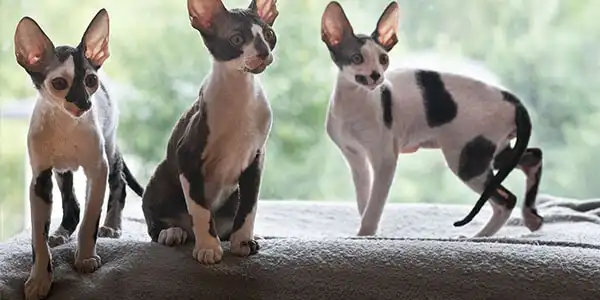
Cornish Rex
The intelligent, adventurous Cornish Rex has lots of energy and will try to play with just about anything. You may need to do some cat-proofing for this one. They’re adaptable and even like to travel. At home, they need a lot of toys and activities to keep them occupied. A consistent schedule of play and mental enrichment can help. They’re also big eaters, often on the lookout for any kind of snack.
This cat is highly affectionate and needs a great deal of affection in return. They’ll follow you and the kids around the home and capture your heart.
Why Are Some Breeds More Intelligent Than Others?
Interestingly, smart cat breeds may not have been intentionally bred for their intellect. Cats are primarily bred for appearance and temperament, which is quite different from dogs, whose breeding focuses heavily on refining skills to do a job, like herding, hunting, or service work.
Depending on who you ask, you’ll get differing opinions on how much breed impacts intelligence. Some breeds are seen as more intelligent, likely because the origins of the breed had their own natural strengths that fell into “brainy” categories, like problem-solving, communication, or trainability. Those strengths would be carried from one generation to the next, making it a hallmark of that breed.While some breeds are naturally smarter or more inquisitive than others, any cat is capable of incredible intelligence. If your cat has a knack for problem-solving, is full of curiosity, or seems to have endless energy, you may have a super smart feline who would love to flex their intelligence muscles through regular enrichment, training, and activities with you.

ZPC-04967