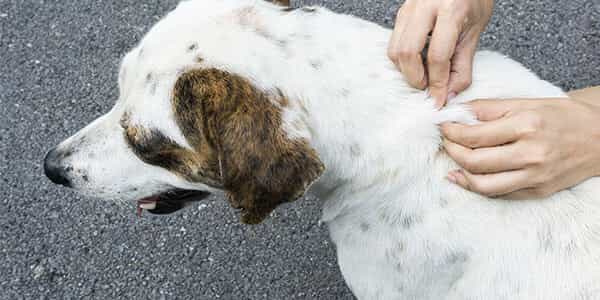

Did you know that removing a tick the wrong way can cause problems for your dog? If you see a tick on your pet, it’s important to keep your cool, grab the appropriate tools, and remove it the correct way. You can follow the directions below, but if you have questions or are uncomfortable, your veterinarian can help with tick removal and any tick removal questions.
Tools for Removing Ticks from Your Dog
Having a few tools handy will make the process simpler and safer.
- Rubber gloves. These add a layer of protection between you and the tick (ticks carry diseases that can be dangerous to humans).
- Tick removal tool. A special tool designed for removing ticks is your best option. Ticks can be incredibly small, and you don't want to squish them during removal. You can find one of these tools online or at a pet store. In a pinch, very pointy tweezers are an option, but can be more complicated.
- Rubbing alcohol or pet-safe antiseptic cleanser. You'll use this to gently clean the tick bite area after the tick is removed. Avoid using a cleaner if the area is near a sensitive site like the eyes.
- A jar or other sealable container. You can put some rubbing alcohol in the jar to kill the tick. You can also talk to your veterinarian about whether this particular type of tick is dangerous, as it may even need to be sent off for testing.
Steps To Remove Ticks From Your Dog
- Put on your gloves. Protect yourself for added security.
- Disinfect your tick removal tool or tweezers. Dip your tool in rubbing alcohol to sterilize it.
- Position your tick removal tool or tweezers. Grab the tick as close to your dog's skin as possible, holding the tick by the head at the skin level. Don't grab the tick's body.
- After you have a good hold on the tick, use a steady motion to pull the tick straight up and out of your dog's skin. Don't twist — this may cause the body to detach from the head. Inspect the tick to be sure you have removed it completely.
- Store the tick. Place the tick in the jar or other container. You now have a reference for your research or discussion with your veterinarian. If this type of tick is particularly dangerous, you may want to keep it for up to 3 weeks as you watch your dog for signs of illness. Keeping the tick in a jar filled with rubbing alcohol will kill it and will allow you to store the tick safely.
- Clean the area. Once the tick is out, use your rubbing alcohol or gentle pet safe anesthetic to clean the area. Avoid this step if the tick was attached near the eye or other sensitive area.
What To Do After Removing a Tick From Your Dog
After removing a tick, watch your dog for signs of illness over the next few weeks.
Keep a close eye on your dog. Watch your dog for signs of tick-borne illness or swelling and irritation at the tick attachment site over the coming weeks and call your vet if any occur. These include:
- Fever
- Joint swelling
- Lameness
- Vomiting and/or diarrhea
- Lethargy
- Decreased appetite
- Swollen lymph nodes
- Neurological problems (seizures, overactive bodily reflexes)
- Weight loss
- Bleeding issues/bruising
- Changes in urine color to red or brown
If you see any of these signs after removing a tick from your dog, contact your veterinarian right away.
Tick Removal Mistakes to Avoid
| Mistake | Why It’s Bad | Possible Consequences | What To Do Instead |
|---|---|---|---|
| Twisting the tick | May leave mouthparts in skin | Infection, inflammation | Pull straight up |
| Crushing the tick | Releases infectious fluids | Disease transmission | Dispose tick safely |
| Using fingers | Poor grip, risk of skin contact | Increased infection risk | Use tweezers or tools |
| Applying chemicals | Ineffective, may harm dog | Skin irritation, burns | Use mechanical removal |
What to Do if the Tick Head Is Still Attached to Your Dog
Sometimes the tick's head will detach from its body and stay latched onto your dog. You'll need to try to remove it. The head will be tiny, so this is where very fine-point tweezers can help. Grab the head, as close to your dog's skin as possible, and pull straight up. If this doesn't do the trick, reach out to your veterinarian.
Why Tick Removal Is So Important
Ticks carry organisms that can cause serious illness (and even death) in dogs.
The way you remove the tick matters. As unpleasant as it sounds, squishing the tick's body can cause it to regurgitate those risky bugs and bacteria into your dog's bloodstream, putting them at further risk of infection.
Protecting Your Dog From Ticks
Keeping your dog on year-round flea, tick, and heartworm disease protection is your first and best line of defense against ticks and the diseases they carry. Even if your dog is mostly indoors, they can still be exposed to ticks brought in by people and things that have been outside. There are also vaccines available for diseases such as Lyme disease. Talk with your veterinarian about the appropriate preventative for your dog and their lifestyle.

ZPC-02575R1

Important Safety Information: Use with caution in dogs with a history of seizures. Simparica Trio contains sarolaner, a member of the isoxazoline class which has been associated with neurologic adverse reactions including tremors, ataxia, and seizures in dogs with or without a history of neurologic disorders. The safe use of Simparica Trio has not been evaluated in breeding, pregnant, or lactating dogs. The most frequently reported adverse reactions in clinical trials were vomiting and diarrhea. See full Prescribing Information.
SIMPARICA TRIO is indicated for the prevention of heartworm disease caused by Dirofilaria immitis and for the treatment and control of roundworm (immature adult and adult Toxocara canis and adult Toxascaris leonina) and hookworm (L4, immature adult, and adult Ancylostoma caninum and adult Uncinaria stenocephala) infections. SIMPARICA TRIO kills adult fleas (Ctenocephalides felis) and is indicated for the treatment and prevention of flea infestations, and the treatment and control of tick infestations with Amblyomma americanum (lone star tick), Amblyomma maculatum (Gulf Coast tick), Dermacentor variabilis (American dog tick), Ixodes scapularis (black-legged tick), Rhipicephalus sanguineus (brown dog tick), and Haemaphysalis longicornis (Asian longhorned tick) for one month in dogs and puppies 8 weeks of age and older, and weighing 2.8 pounds or greater. SIMPARICA TRIO is indicated for the prevention of Borrelia burgdorferi infections as a direct result of killing Ixodes scapularis vector ticks.