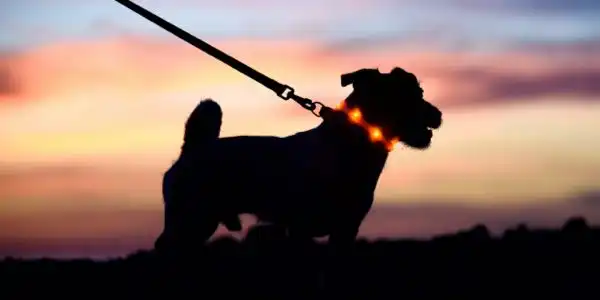
Taking your dog out for a walk is a great way to bond and keep them healthy. But as days get shorter and darkness falls earlier, walking dog at night becomes a normal part of many pet parents’ routines. Nighttime walks can feel peaceful, but they also come with extra risks for both you and your dog. By being prepared and following a few simple steps, you can make sure every evening stroll is safe and enjoyable.
Stay Visible with Reflective Gear
Both you and your dog should wear bright reflective clothing and gear. Make sure that the reflective features of your jacket or coat are visible from all sides, not just the front or back. Consider wearing a reflective vest as your last layer if you prefer to switch up your outerwear based on the weather.
Dogs should have a reflective leash and collar. Ideally, a reflective harness is a better option, as reflective collars are less visible from behind and are easily hidden by thick and fluffy fur.
Light Up the Night
To increase your visibility for others, add gear with built-in lights. Make it fun with LED-powered collars, harnesses, and leashes, which have a variety of color options. You can often even set them to flashing, making your dog more noticeable.
Wear a headlight or carry a flashlight as you walk. Not only does this help others see you, but it also helps you see what's ahead. You can even wear light-up shoes or glowsticks to make it a “party” walk.
Stick To Well-Lit Sidewalks and Pathways
If your usual walking route doesn't have streetlights or good lighting, map out a new route that does. Another thing to consider for safety is using sidewalks, if available, versus walking in the street. This may or may not be doable, depending on your location. If there aren't sidewalks or streetlights, wear your reflective and light-up gear and carry a flashlight.
According to NHTSA, three out of every four pedestrian fatalities occur at night, and visibility plays a critical role in these incidents.
Watch Out for Wildlife
Certain animals, such as coyotes and raccoons, are more active during the night and at dusk and dawn. Typically, wildlife would rather avoid you and your dog, so make sure you’re making some noise to warn them of your approach, such as wearing a bell, jingling your keys, or talking to your dog as you walk. Having a whistle can even be helpful. Keep your dog on leash to prevent them from wandering off and coming face-to-face with another animal.
Don’t Get Distracted
The best thing you can do is stay alert. Be aware of your surroundings, watching and listening for any approaching cars, cyclists, and wildlife. Check behind you often — you don’t want to be startled if a cyclist or another walker suddenly passes by.
Avoid listening to music on headphones or getting distracted by your phone. Stop and check the roadway whenever crossing the street. Don’t count on others looking out for you. Make sure to look out for yourself and your dog.
Try A New Path
If your usual route feels unsafe or has poor lighting, try exploring a different path. This can also make walks more interesting for your dog, giving them new sights and smells to enjoy. Changing up your routine can be a fun way to keep both of you engaged and alert.
Nighttime walks can be a peaceful and healthy part of your day. By using reflective gear, adding lights, sticking to safe paths, watching for wildlife, and staying focused, you’ll help keep both you and your dog safe.

ZPC-02515R1

- Pedestrian Safety. https://www.nhtsa.gov/road-safety/pedestrian-safety. Accessed February 12, 2026.