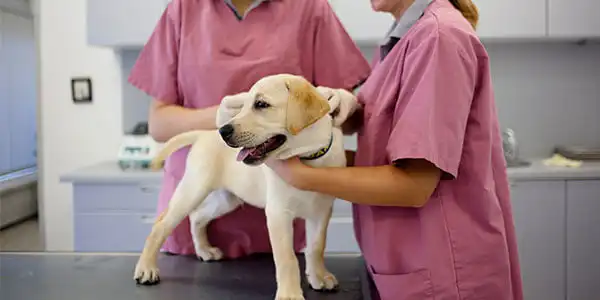

Puppies are curious and love to explore everything by licking, chewing, and rolling around. While this is fun to watch, it also puts them at risk of catching serious diseases because their immune systems are still developing.
Thankfully, there’s a simple way to help protect your puppy against preventable diseases: vaccines.
How Vaccines Work
A vaccine, whether it’s for puppies or adult dogs, is a preparation of a disease-causing microorganism that has been weakened or killed to imitate a real infection without causing illness.
The vaccine stimulates your dog's immune system and trains it to be better prepared to fight the disease if and when your dog is exposed to it in the future. Thus, the vaccine can help your dog avoid getting sick at all or lessen the symptoms your dog experiences even if they do get sick.
Why Vaccinating Puppies Is Important
Increased protection is the most significant benefit of vaccinating puppies. These routine immunizations offer added safety against from painful and sometimes fatal diseases.
Here are some other things to keep in mind:
- Disease can spread easily. Not all dangers lurk in far-off places. Parks, kennels, groomers, even sidewalks and other gathering spots can be hotbeds for canine disease. You can even bring viruses and bacteria inside your home on your shoes.
- Vaccines help protect all puppies. When most dogs are vaccinated, the spread of disease is reduced, helping to protect all puppies, including those too young or sick to be vaccinated (known as herd immunity).
- Many places and activities require vaccines. Dog shows, doggy daycare, puppy classes, and boarding facilities all require vaccines in order to help keep their participants safe. Even groomers and veterinary hospitals often require proof of vaccination for the safety of other dogs using the same facility.
- Vaccines are typical much cheaper than treating the disease. They’re also considerably less stressful for you and your puppy. The financial, emotional, and physical toll of a serious, and possibly deadly, disease is tremendous.
- Puppy vaccines also indirectly help protect people. In rare cases, diseases like Leptospirosis, Bordetella, and Rabies can be passed from dogs to people.
What Vaccines Do Puppies Need?
Vaccines for puppies are categorized as either core or non-core.
Core Vaccines
Core vaccines are recommended for all puppies and adult dogs regardless of their lifestyle (i.e., if they spend time outside, go to parks, there are children at home, etc.). They are:
- Canine Distemper vaccine (sometimes called DAPP, DHPP, or DA2PP) protects against several diseases, including distemper, adenovirus 1 and 2, parainfluenza, and parvovirus.)
- Leptospirosis vaccine (sometimes given with distemper)
These are the diseases covered by the core vaccine series:
- Canine distemper virus. A highly contagious virus, distemper affects the respiratory, nervous, and digestive systems, and is fatal in 80% of puppies.1
- Canine adenovirus 1. This virus causes canine hepatitis, creating inflammation and damage to the liver that can be fatal, especially in young puppies and unvaccinated dogs.
- Canine adenovirus 2. This type of adenovirus can cause a highly contagious respiratory infection.
- Canine parainfluenza virus. This virus is one of several microorganisms that can contribute to respiratory disease commonly known as "kennel cough.”
- Canine parvovirus. A highly contagious and deadly disease, parvo primarily affects the gastrointestinal tract and bone marrow.
- Rabies virus. This is a fatal disease that affects the central nervous system and is transmissible to humans.
- Leptospirosis. Lepto is a very contagious bacteria commonly found in the outdoor environment – it can be fatal, and/or lead to kidney failure, liver failure, lung disease, and possible heart damage.
Puppies are especially vulnerable to parvovirus, distemper, canine hepatitis, leptospirosis, and rabies.
Non-Core Vaccines
Non-core vaccines are recommended for puppies and dogs based on their lifestyle and risk of exposure. Increased risk may include participating in training classes, frequent boarding, doggy daycare visits, and living where ticks are widespread.
Non-core vaccines include:
- Bordetella
These are the diseases non-core vaccines protect against:
- Kennel cough (Canine parainfluenza virus). This virus is one of several microorganisms that can contribute to respiratory disease commonly known as "kennel cough.”
- Lyme disease (Borrelia burgdorferi). This tick-borne disease can have no symptoms, mild symptoms such as increased lethargy, or many symptoms such as mild lameness, swollen joints, kidney damage, and neurologic issues.
- Canine influenza. This is a contagious respiratory disease that can become severe, possibly leading to pneumonia or death.
Why Puppies Get a Series of Vaccines
Some vaccines for puppies need to be given more than once. Your puppy will receive a series of vaccines and boosters at specific times.
Puppies get immunity-producing proteins, called maternal antibodies, from their mother's milk (specifically, colostrum, which is the first milk produced by their mother). This protection typically wears off between six and sixteen weeks of age.
It’s impossible to know when a puppy will lose this protection, and it varies based on the immunity level of the mother. If a puppy receives a vaccine while they still have protection from the maternal antibodies, the vaccine can be blocked by those antibodies. The pup’s immune system can’t be adequately stimulated.
On the other hand, if you wait longer to ensure the maternal antibody protection has faded, the puppy is at risk.
There’s a gap where their immune system isn’t fully ready yet. That’s where vaccines step in to build long-term protection.
The series helps ensure that your puppy is fully protected, regardless of the maternal antibodies, because of how they’re scheduled. The first dose is the priming dose. The second dose (booster) helps stimulate a higher and longer-lasting degree of immunity.
Puppy Vaccine Schedule
Puppies usually start their vaccine series at six to eight weeks of age, with boosters done every three to four weeks. Below is an example of one possible vaccine series, although vaccines can be spaced apart even more if you and your vet choose to do so. Your veterinarian may recommend additional non-core vaccines.
- Six to eight weeks
- Distemper vaccine (1 of 3)
- Bordetella vaccine (non-core)
- 10 to 12 weeks
- Distemper vaccine (2 of 3)
- Leptospirosis vaccine (1 of 2; can be given as part of Distemper vaccine)
- 12 to 16 weeks
- Distemper vaccine (3 of 3)
- Rabies vaccine (required by 12 weeks of age by law in most states)
- Leptospirosis vaccine (2 of 2; can be given as part of Distemper vaccine)
- 16 to 20 weeks
- Parvovirus vaccine (a single dose in addition to the previous doses in the distemper vaccine)
- Lyme vaccine (non-core; 1 of 2; highly recommended in endemic areas)
- Canine influenza vaccine (non-core; 1 of 2)
- 20 to 24 weeks
- Canine influenza vaccine (non-core; 2 of 2)
- Lyme vaccine (non-core; 2 of 2)
Are Puppy Vaccines Safe?
Yes. Vaccines are safe for puppies and adult dogs. Several studies, including one published by the Journal of the American Veterinary Medical Association, show a low incidence of adverse reactions to vaccines.2 Based on survey results from 2016 to 2020, there were only 18.4 adverse reactions for every 10,000 dogs vaccinated.3
Even though vaccines are safe, it’s still important for puppies to be monitored after each dose. Most adverse reactions to puppy vaccines are mild and easily treated. Vaccines have saved more animal lives than any other medical intervention in history so it’s the best way to keep your puppy protected.

ZPC-04697

- Canine Distemper. Office of Fish and Wildlife Health and Forensics. https://dep.nj.gov/njfw/wp-content/uploads/njfw/canine_distemper.pdf. Accessed May 13, 2025.
- Vaccination Pros and Cons: Insights for Pet Owners. Morris Animal Foundation. https://www.morrisanimalfoundation.org/article/vaccinations-pros-and-cons-insights-pet-owners. Accessed May 12, 2025.
- Vaccine-associated adverse events in dogs are far less common today. Banfield Pet Hospital Exchange. https://www.banfieldexchange.com/News/Vaccine-associated-adverse-events. Accessed May 14, 2025.