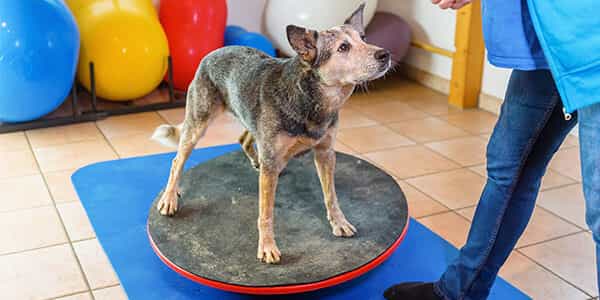
If your dog is recovering from recent surgery, healing from an injury, or suffering from a chronic condition like arthritis, you want them to feel comfortable and happy again. Dog physical therapy and rehabilitation can help improve mobility, reduce pain, and support recovery—so your dog can enjoy life more. In this article, you’ll learn what dog physical therapy and rehab involve, how they work, and what you can expect at each step.
Why Your Dog Might Need Physical Therapy or Rehab
The terms “rehabilitation” and “physical therapy” are often used interchangeably, but there is a slight difference.
Rehabilitation focuses on restoring function after your dog has an injury, surgery, or even illness. It’s common after orthopedic surgeries, like cruciate ligament repairs, amputation, or hip replacements. It can also help support dogs with osteoarthritis, hip or elbow dysplasia, or tendon and ligament injuries.
Physical therapy tends to focus more on minimizing pain and keeping the body moving in healthy ways. It’s ideal for senior pets, as well as sports injuries or strength and fitness training for dog athletes. Some dogs use physical therapy to counteract age-related muscle loss or as a low-impact exercise during weight-loss programs. It can help with neurological issues that affect balance or coordination, like post-herniated disc repair, intervertebral disc disease (IVDD) management, degenerative myelopathy, ataxia, and more.
Though less common, you may also hear this type of rehab work referred to as canine physiotherapy.
Overall, rehab and physical therapy have been shown to increase the quality of life for dogs dealing with various degrees of lameness and pain.1
Benefits Of Dog Rehabilitation and Physical Therapy
- Improved mobility
- Reduced pain
- Faster recovery from surgery or injury
- Prevention of future injury
- Strength and fitness for dog athletes
- Better quality of life for senior dogs or those with chronic conditions
Starting Rehabilitation or Physical Therapy with Your Dog
Your veterinarian can refer you to a certified canine rehabilitation therapist (CCRT). A CCRT (sometimes referred to simply as a physical therapist) is usually a veterinarian, but not always. They could also be a licensed veterinary technician or veterinary nurse, a licensed physical therapist for people, a physical therapist assistant, an occupational therapist, or a student of one of these professions. Certified canine rehabilitation therapists are not the same as massage therapists or chiropractors.
What To Bring To Your First Appointment
- Recent medical records
- List of medications
- Their favorite treats
- Video clips of your dog moving at home
- Notes on changes in mobility or comfort
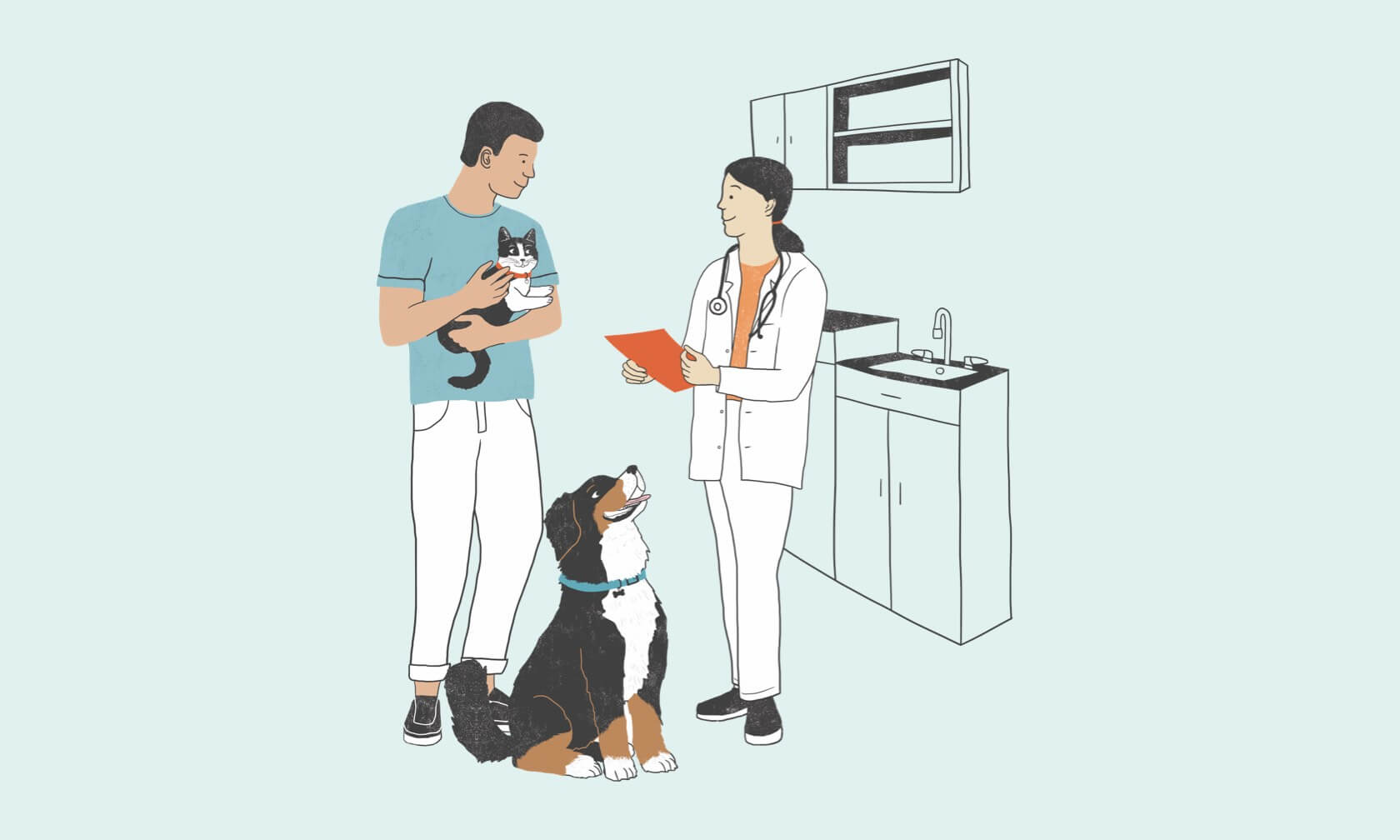
During your first appointment, the physical therapist will review your dog’s medical history, watch how they move, and may recommend X-rays or other tests. Initial sessions tend to last about one hour.
What Happens in A Physical Therapy or Rehab Session
A rehab or physical therapy session might include gentle stretching, massage, or joint movements to ease stiffness. Your dog may go through strengthening exercises like sit-to-stand practice, balance work, or walking over cavaletti poles. Hydrotherapy, whether using an underwater treadmill or swimming, can build muscle without stressing sore joints. Some clinics also offer other therapies like cold laser therapy, tPEMF, or electrical stimulation to promote healing and reduce inflammation for your dog.
Ongoing rehabilitation and physical therapy sessions typically last 30 to 60 minutes, depending on your dog’s endurance and issue. Your dog might be tired afterward. It’s normal for mild muscle soreness, just as you’d be sore after starting a new workout routine.
Your dog’s physical therapist might give you homework to practice specific exercises or movements at home with your dog.
In-Clinic vs. At-Home Rehabilitation and Physical Therapy
Many dogs do best with a mix of professional sessions and at-home exercises.
In-clinic visits offer specialized equipment, skilled supervision, and a controlled environment. This can be crucial for dogs recovering from surgery or dealing with complex conditions.
At-home work can help maintain progress between visits, but it’s important to follow your therapist’s instructions closely to avoid setbacks in recovery.
Some dogs with mild conditions or less serious mobility challenges can do most of their rehab or physical therapy at home, but starting with professional guidance ensures safety and effectiveness.
How Long Does a Dog Need Rehabilitation or Physical Therapy?
The length of physical therapy or rehabilitation depends on your dog’s age, the severity of their condition, and their response to treatment. Straightforward surgical recoveries, such as TPLO or intervertebral disc disease, may take anywhere from six to twelve weeks, while chronic issues like arthritis may need ongoing therapy that lasts several months or more. Your physical therapist will check your dog’s progress regularly and adjust the plan as needed.
How Much Does Rehabilitation or Physical Therapy for Dogs Cost?
Costs vary widely. Initial evaluations often range from $100 to $200 or more. Follow-up sessions can vary from $50 to $300 or more, depending on the type of therapy and specialized equipment needed (such as underwater treadmills or veterinary laser therapy machines).2
If you have pet insurance, it may cover all or a portion of physical therapy or rehabilitation after an injury or surgery.
Rehabilitation not only helps dogs recover faster after surgery but can also boost mood, reduce pain, and keep them active longer. Physical therapy can help by improving mobility, flexibility, and overall comfort. For many senior dogs or those with chronic conditions, it can mean the difference between just getting by and truly enjoying their days.
ZPC-05213

- Piotti P, Albertini M, Lavesi E, Ferri A, Pirrone F. Physiotherapy Improves Dogs' Quality of Life Measured with the Milan Pet Quality of Life Scale: Is Pain Involved? Vet Sci. 2022 Jul 2;9(7):335. doi: 10.3390/vetsci9070335. PMID: 35878353; PMCID: PMC9324735. https://pmc.ncbi.nlm.nih.gov/articles/PMC9324735/. Accessed August 12, 2025.
- Physical Therapy for Dogs. Yes it’s a Thing and it can Work Wonders. Canine Journal. https://www.caninejournal.com/physical-therapy-for-dogs/. Accessed August 12, 2025.