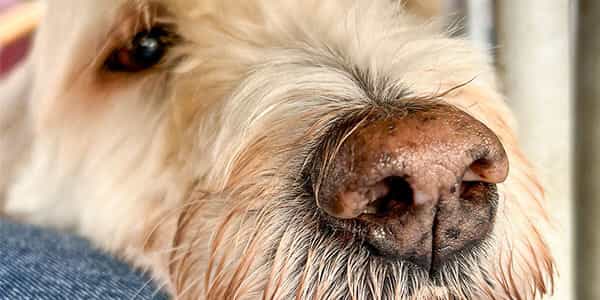
A wet dog nose — fascinating tool for enhanced sniffing, interesting body part that offers insight into their health, or damp, cold thing they use to wake you up in the morning?
But does a wet nose really mean your dog is healthy? And should you worry if their nose feels dry or warm? Understanding why dog noses are wet can help you better care for your pet and spot signs when something isn’t quite right. Let’s talk about what makes a wet nose so important and what you can (and can’t) learn from it.
Why Are Dog Noses Wet?
Dogs rely heavily on smell to navigate their world, and a wet nose works better for capturing scent. The damp surface is a bit like glue, helping scents stick to the nose where they’re absorbed, improving your dog’s ability to smell.1
Nose licking, which adds moisture, also helps with scent detection. By licking their nose, they pull scent particles into their mouth, getting them closer to the vomeronasal organ (also known as the Jacobson’s organ), and enhancing their sense of smell.2
That wet nose also helps keep your dog cool. Dogs can only sweat from their nose pad and foot pads. The fluid in and on their nose helps cool as it evaporates.
How Does Your Dog’s Nose Stay Wet?
Several things keep your dog’s nose moist:
- Special glands in the nose secrete a thin, watery fluid that lines the nasal passages and nostrils.
- Environmental moisture is picked up as dogs sniff leaves, puddles, food bowls, and water.
Frequent nose licking adds even more moisture.
Is Your Dog’s Nose Wet Enough?
There’s no established standard for how wet your dog’s nose should be since each dog is unique. Every dog is unique, and some naturally have wetter noses than others. If you’ve recently adopted a new dog and notice their nose is drier than your other pup’s, talk with your veterinarian. If your dog’s nose changes in wetness and it’s not normal for them, that’s another good reason to check in with your vet.
Can Your Dog’s Nose Be Too Wet?
Sometimes, an overly wet nose could be a sign of a medical issue. Excess nasal discharge, or discharge that’s thicker than normal, might signal a health problem. Your veterinarian is the best resource if you notice these changes.
Medical Causes for an Overly Wet Dog Nose
Here are a few medical reasons your dog’s nose may be too wet:
- Environmental allergies
- Brachycephalic breeds with their unique facial anatomy
- Dental disease, such as periodontal disease or tooth-root abscess, causing increased inflammation
- Bacterial, fungal, and viral respiratory infections
- Inflammation from exposure to irritants, such as smoke, chemicals, or perfumes
- Polyps or tumors within the nasal passages
- Rhinitis causing persistent inflammation of the nasal passages
Is Your Dog’s Nose Cool Enough?
You’ve probably heard that feeling your dog’s nose is an easy way to tell if they have a fever. Unfortunately, it’s not that simple. While the nose is often cool because of that moisture layer, it can warm up at times. The temperature of their nose is influenced by their unique biology, their environment, and their activity level.
If your dog’s nose feels warm but they’re acting normal and eating well, there’s usually no need to worry. If a warm nose comes with changes in behavior, loss of appetite, vomiting, or diarrhea, call your veterinarian.
Can Your Dog’s Nose Be Too Dry?
There’s generally no cause for concern if your dog’s nose seems a little dry, but it’s helpful to be aware of non-medical reasons for this.
- Genetics or age. Just like some individuals have drier skin than others, some dogs have a naturally drier nose than others.
- Environment. Living in a drier climate can cause your dog’s nose to be drier.
- Heat. Lying in the sun or near a heater can cause your dog’s nose to dry a bit more than usual. Recheck the snoot once they are up and moving to see if the moisture returns.
To help with any of these issues in the long term, you can try using a cool mist humidifier in your home.
Medical Causes for Your Dog’s Dry Nose
There are medical issues that can cause a dry dog nose and may need your prompt attention.
- Sunburn. A sunburn can cause a dry, red, flaky nose and can be quite painful since a dog’s nose is so sensitive. Dogs with pale or pink noses are particularly vulnerable.
- Dehydration. A dry nose can be one sign of severe dehydration. If you suspect your dog is severely dehydrated, encourage them to drink immediately and seek veterinary care.
- Discharge. Abnormal discharge can cover your dog’s nose, making it look dry and crusty. If it’s bubbly, thick, green, yellow, or reddish, have your dog evaluated by your veterinarian.
- Diseases and disorders. Autoimmune diseases (like lupus), skin infections, or genetic problems (like zinc-responsive dermatitis) can dry out the nose.
If you suspect your dog’s nose is abnormally dry, especially if you notice other concerning signs, like scabs, sores, or cracking, changes in their normal behavior, lethargy, or changes in eating or drinking habits, it’s essential to see your veterinarian.
Your dog’s wet nose is a fascinating thing when you know a little about what that wetness does. Not only can it aid in capturing and analyzing scents and help keep your dog cool, but it can also give you some general insights into your dog’s health.
ZPC-05195

- Why Do Dogs Have Wet Noses. Vet Explains Pets. https://vetexplainspets.com/why-do-dogs-have-wet-noses/. Accessed September 10, 2025.
- Why Do Dogs Have Wet Noses. VCA Veterinary Hospitals. https://vcahospitals.com/know-your-pet/why-do-dogs-have-wet-noses. Accessed September 10, 2025.