
See How Monthly Solensia Can Help Control Your Cat’s Osteoarthritis (OA) Pain
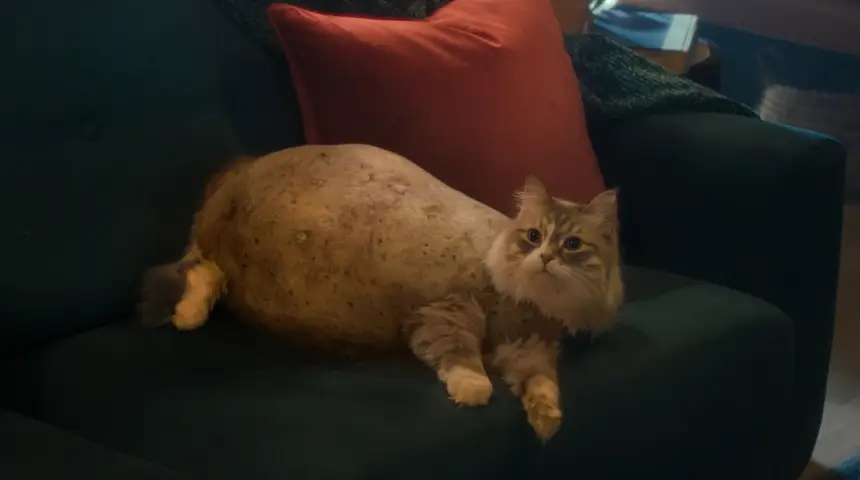
Get Your Cat Back to Being Themselves with Solensia
You know your cat better than anyone, but if they’re suffering from osteoarthritis (OA), a chronic and painful disease, they might be hiding the symptoms from you. While you may think your cat is slowing down due to old age, they could be suffering from pain associated with OA. OA pain can make it harder for your cat to navigate stairs, run, jump, or play. It’s important to remember that OA pain can happen to cats of any age, not just older cats.1,2
Ask your vet about Solensia, the first and only treatment that’s been approved by the US Food and Drug Administration (FDA) to control cat OA pain when administered monthly.

Without Management, OA Pain Will Continue to Worsen
OA is a type of arthritis that happens when the protective tissue in the joints (cartilage) is worn down, which may even cause bones to rub against one another. OA makes moving harder, but it can also cause severe pain, seriously affecting your cat's health and well-being.1-3
The pain associated with OA is persistent and chronic, meaning it lasts a long time. If not treated, OA pain will get worse over time.4
If you think your cat is suffering from OA pain, speak to your vet health team about the physical, behavioral, and relationship changes to look for in your cat.
Why Solensia?
Solensia is a once-monthly injection given by a veterinary professional that offers long-lasting (1 month) OA pain control that can help improve mobility and keep OA pain from getting in the way of the unique bond you and your cat share.5*
Solensia is a type of medicine called a biologic (a protein) that works like your cat’s naturally made antibodies to block pain signals and target a root cause of OA pain.6
- Solensia was shown to be safe and effective, and was proven to help cats improve mobility5
- Three out of every 4 cat caregivers saw improvement in signs of pain when their cats were treated monthly with Solensia in a 3-month study7†
- Solensia was shown to increase mobility in cats after a single treatment5‡
- Solensia is approved as safe and effective in controlling OA pain in cats when used in accordance with its approved labeling
See how Solensia has helped cats.
*Two doses may be needed to see the clinical effect.
†67% of cat owners experienced improvement in signs of their cat’s pain in the placebo group.
‡Individual results may vary.

The Solensia Difference
Explore real experiences from cat owners about their cat’s success with Solensia.
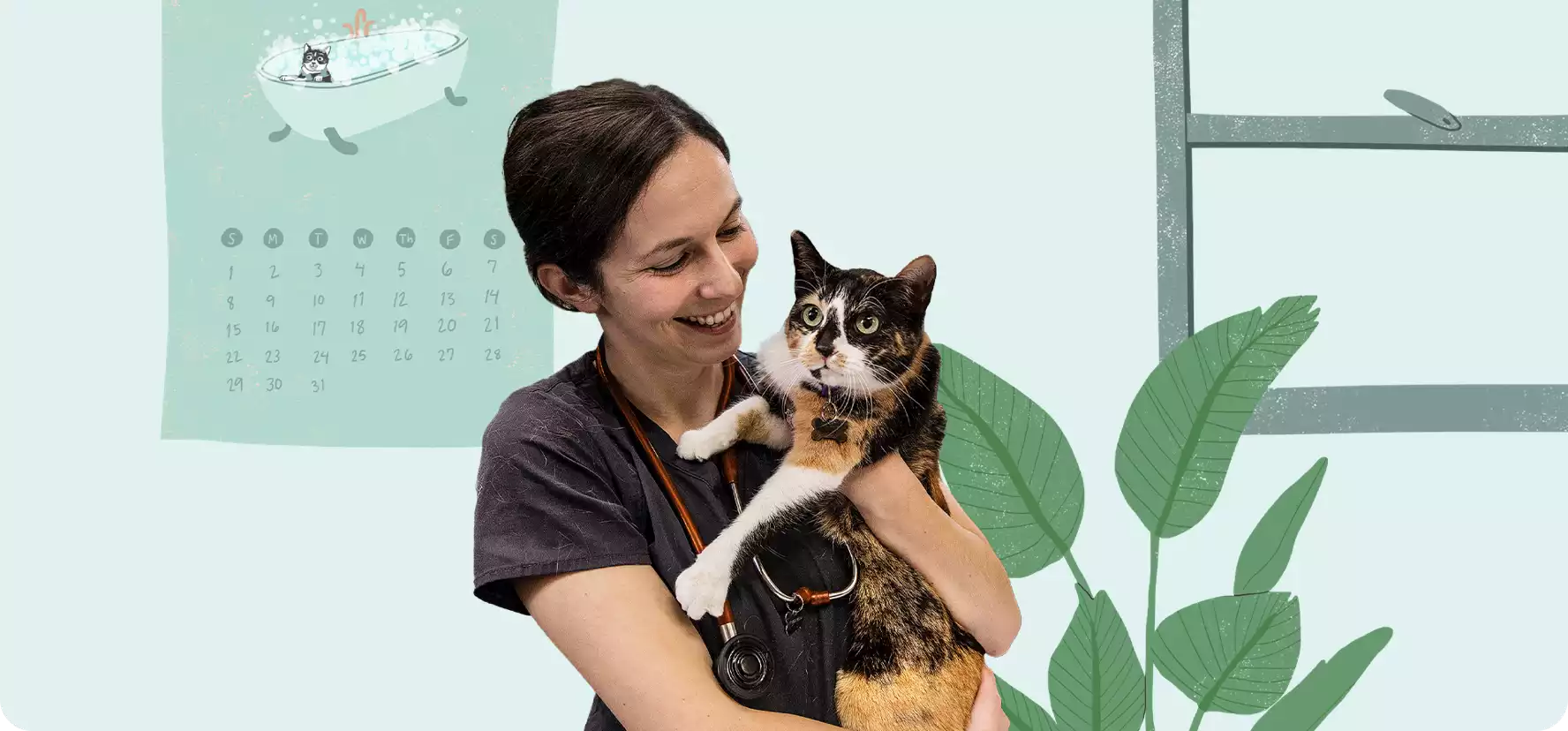
Vet-Approved Solensia Resources for You
Frequently Asked Questions
Solensia is administered by veterinary professionals. If you suspect your cat suffers from OA pain, ask your vet health team about Solensia.
In a clinical study, Solensia was shown to be well tolerated by cats. The most common adverse events reported in a clinical study were vomiting and injection site pain. Solensia may be associated with scabbing of the head and neck, dermatitis, and pruritus.7
As with all medicines, there are potential side effects. Talk to your veterinarian about the benefits and risks before starting your cat on any treatment.
Three out of every 4 cat caregivers saw improvement in signs of OA pain when their cats were treated monthly with Solensia in a 3-month study.7*
In a study, Solensia was shown to increase mobility in cats after a single treatment.5†
*67% of cat owners experienced improvement in signs of their cat’s pain in the placebo group.
†Individual results may vary.As a monthly injection administered at your vet’s office, your vet will schedule an appointment every 4 weeks to administer treatment and reassess your cat's OA pain and mobility.
In a study, Solensia was shown to increase mobility after 3 doses, with some cats experiencing improvements with just 1 dose.5 As individual results will vary, it's best to talk with your vet health team to hear how Solensia is working in their patients.
At Zoetis, we take suspected AEs very seriously for all of our products, including Solensia. Our team of veterinary experts works alongside both pet owners and their attending veterinarians to understand each pet’s unique situation when brought to our attention. And we report every potential adverse event we receive directly to regulators like the Food and Drug Administration (FDA) and the European Medicines Agency (EMA).
Zoetis also has systems in place to continuously monitor the volume and trends of adverse event reporting related to all of our veterinary medicines, including Solensia. In compliance with the law, we share these reports of aggregated case data to regulatory agencies around the world, and if a new safety signal emerges, we partner with regulatory authorities on appropriate actions, which could include amendment of our label as necessary to better inform veterinarians and pet owners of potential risks or safety concerns to mitigate risks to the pet.
While we report all AEs in full compliance with the law, we acknowledge that this information is imperfect, as reporting by pet owners and veterinarians is voluntary and we cannot confirm that all doses distributed have been administered, but it is the best post-launch indicator we or any other company has as to the rate of AEs occurring.
We encourage all pet owners who believe their pet may have had an adverse reaction to Solensia or any medication to contact their pet’s veterinarian first. Pet owners should contact Zoetis, and when they do, we document the conversation and make every effort to include the attending veterinarian in the conversation. This helps us fully understand each case and report the potential adverse effect to the appropriate regulatory body. We always encourage pet owners to also speak with their veterinarian for further consultation and advice after speaking with the Zoetis team.

IMPORTANT SAFETY INFORMATION: See full Prescribing Information at SolensiaPI.com. For use in cats only. Women who are pregnant, trying to conceive or breastfeeding should take extreme care to avoid self-injection. Allergic reactions, including anaphylaxis, could potentially occur with self-injection. Solensia should not be used in breeding cats or in pregnant or lactating queens. Solensia should not be administered to cats with a known allergy to frunevetmab. The most common adverse events reported in a clinical study were vomiting and injection site pain. Solensia may be associated with scabbing of the head and neck, dermatitis, and pruritus.
INDICATION: For the control of pain associated with osteoarthritis in cats.
References:
- Slingerland LI, Hazewinkel HA, Meij BP, Picavet P, Voorhout G. Cross-sectional study of the prevalence and clinical features of osteoarthritis in 100 cats. Vet J. 2011;187(3):304-309. doi:10.1016/j.tvjl.2009.12.014
- Hardie EM, Roe SC, Martin FR. Radiographic evidence of degenerative joint disease in geriatric cats: 100 cases (1994-1997). J Am Vet Med Assoc. 2002;220(5):628-632. doi:10.2460/javma.2002.220.628
- Godfrey DR. Osteoarthritis in cats: a retrospective radiological study. J Small Anim Pract. 200;46(9):425-429. doi:10.1111/j.1748-5827.2005.tb00340.x
- Adrian D, Papich M, Baynes R, Murrell J, Lascelles BDX. Chronic maladaptive pain in cats: A review of current and future drug treatment options. Vet J. 2017;230:52-61. doi:10.1016/j.tvjl.2017.08.006
- Gruen ME, Myers JAE, Lascelles BDX. Efficacy and safety of an anti-nerve growth factor antibody (frunevetmab) for the treatment of degenerative joint disease-associated chronic pain in cats: a multisite pilot field study. Front Vet Sci. 2021;8:610028. doi:10.3389/fvets.2021.610028
- Keizer RJ, Huitema AD, Schellens JH, Beijnen JHM. Clinical pharmacokinetics of therapeutic monoclonal antibodies. Clin Pharmacokinet. 2010;49(8):493-507. doi:10.2165/11531280
- Solensia (frunevetmab injection). Package insert. Zoetis Inc; 2021 (August).