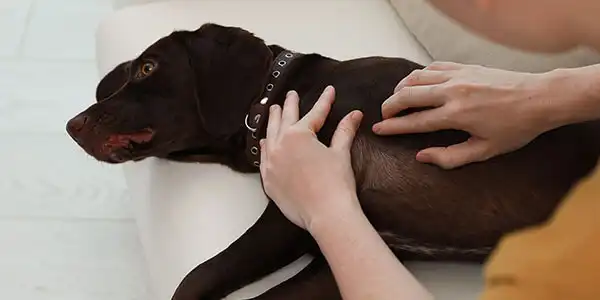
You might be surprised to learn that dogs can get ingrown hairs. Though rare, they can cause itchy, painful bumps —and those red spots might actually be something else. If your dog develops any unusual skin changes, lumps, or bumps, always consult your veterinarian. Some skin conditions look similar, but they require very different treatments. Let’s explore what may be going on and some possible remedies.
Types of Ingrown Hairs Dogs Can Get
An ingrown hair occurs when a hair grows down into the skin instead of rising to the surface. They aren’t common in dogs, but when they do happen, are typically found on the paws, around the mouth, or chin.
There are a few different ways that dogs can develop ingrown hairs.
Shaving
When hair grows back after a close shave (from surgery, an ultrasound, IV catheter, or grooming), they may become ingrown. These appear as one or more tiny red bumps on the skin. They may cause itching on some dogs, while others aren’t bothered. Ingrown hairs rarely cause a significant problem unless your dog irritates the skin by licking or scratching too much.
Interdigital Cysts
When dogs put extra or uneven pressure on their paws, they may also put extra pressure on the skin between their toes. This can push hairs under the skin, causing ingrown hairs on the paw between the toes. It may initially look like a small red bump but can progress to a painful, fluid-filled cyst. Dogs may lick or bite the affected paw and may even limp due to pain.
Certain breeds, like Labrador Retrievers, English Bulldogs, Pitbull Terriers, German Shepherds, and Shar-Peis are prone to developing these ingrown hairs.1
Here are some other risk factors:
- Short, bristly hair
- Wide paws
- Frequent paw licking
- Walking on concrete or an uneven surface
- Obesity
- Abnormal stride due to painful or neurological conditions
- Hormonal imbalances
Canine Acne
Acne in dogs is very different than acne in people. It develops in some young dogs due to ingrown hairs on their chin and lips. These dogs rub their face or chin against their paws, the ground, or other surfaces, pushing broken hairs under the skin. They may do this due to allergies, mites, or other skin issues. The broken hairs cause inflammation, leading to itching, pain, and infection, as well as small red bumps on their faces. Affected breeds can include English Bulldogs, Great Danes, Mastiffs, Weimaraners, Rottweilers, Boxers, Doberman Pinschers, and German Short-Haired Pointers.2
Learn more about these breeds with Zoetis Petcare’s Breed Explorer!
Other Causes of Red Bumps That Look Like Ingrown Dog Hairs
Red, itchy bumps are extremely common, but most aren’t from ingrown hairs. If your dog is not on flea preventative, or has allergies, there are several possible causes of the red bumps:
Pyoderma and Folliculitis
Infections (bacterial, fungal, or mites) can inflame the skin and hair follicles creating red bumps
Plant Foreign Body
A tiny piece of a foxtail, grass awn, or burr can get beneath the skin, especially between the toes, causing signs identical to an ingrown hair.
Insect Bites
Fleas, chiggers, and fire ants can leave small red bites that could be mistaken for an ingrown hair.
Home Remedies for Your Dog’s Ingrown Hairs
Ingrown hairs usually clear up on their own. To help the process, there are a couple of things you can try at home:
Warm Compress
Use a warm washcloth can be applied to the bump for a few minutes a couple times daily. Be sure it is not too hot to the touch. Dry the area when you’re done.
Never microwave the washcloth. It can get too hot and can burn your dog.
Warm Water Soak
If your dog’s paw is affected, try warm water soaks for 10 minutes, twice daily. You can do all four paws in a bathtub with shallow water or just one paw in a bowl of water. Dry your dog’s paws thoroughly when done.
Do not attempt to open or pop bumps or ingrown hairs. This can cause infection.
When to See the Veterinarian for Your Dog’s Ingrown Hairs or Bumps
If your dog has bumps that are painful, itchy, don’t go away within two days, or get worse, it’s time for a vet visit. Your vet can confirm the cause of the bumps and develop a treatment plan.
Preventing Ingrown Dog Hairs
You can’t always prevent ingrown hairs, especially after close shaves. If your dog is groomed, ensure the groomer does not clip all the way to the skin. If your dog likes to lick shaved skin, wearing a cone or inflatable neck collar can prevent licking some areas of the body until the hair grows back. You can also talk to your veterinarian.
If your dog is prone to interdigital cysts or chin acne, it is best to talk to your vet. For canine acne, addressing allergies or skin infections can help prevent flare ups.
ZPC-04823

- Interdigital Furunculosis in Dogs. Merck Manual Veterinary Manual. https://www.merckvetmanual.com/integumentary-system/interdigital-furunculosis/interdigital-furunculosis-in-dogs. Accessed September 4, 2024.
- Small and Large Animal Dermatology Handbook, Vol 2., 3.8 Canine Acne. University of Minnesota Libraries. https://open.lib.umn.edu/animaldermatology2/chapter/idiopathic-keratinization-disorders-canine-acne/. Accessed January 15, 2026.