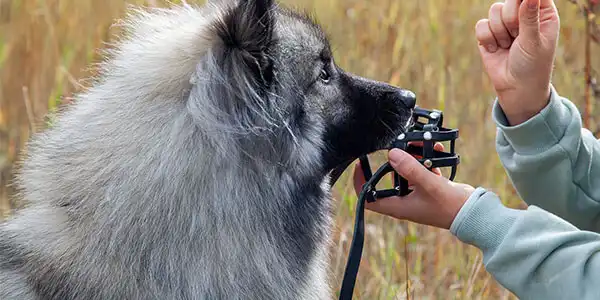
Seeing a dog wearing a muzzle can make some people uneasy. Many assume that muzzles are only for aggressive dogs, but that’s a common misconception. In reality, muzzles are valuable tools for safety, training, and prevention when used correctly.
With proper training and positive associations, a muzzle can help keep both dogs and people safe in stressful situations. Let’s look at why muzzles are used, the different types available, and how to train your dog to wear one comfortably.
Uses for Dog Muzzles
A common misconception is that muzzles are only used for aggressive dogs. While they certainly are a precautionary tool in aggression cases, muzzles are also used for:
- Preventive safety. During an emergency, even a usually calm or friendly dog might bite due to fear or pain. A muzzle can prevent this and, if trained to wear it beforehand, your dog may find it calming.
- Vet or groomer visits. When needing to perform often uncomfortable procedures, vet staff may place a muzzle on a dog so they can safely move around and restrain the dog. Groomers may also have a dog wear a muzzle when they're trimming around the face or clipping nails.
- Prevention of inappropriate eating. Some dogs habitually grab and swallow items while outside on walks or in their yards. These things can be extremely dangerous, whether due to toxicity or causing a gastrointestinal obstruction. Muzzles can be fitted with a front guard that prevents a dog from eating inappropriate objects such as rocks, feces, or trash.
- Social cues for distance. Muzzles are also used as a signal to other people that a dog needs space. This can be especially important for dogs in training who are working on overcoming fear or generalized anxiety.
- Inhibiting predatory behavior. Some dog breeds have a high prey drive, meaning that when they're playing with other dogs, their brains may switch into chase-and-grab mode. To prevent injury, these dogs will often wear a muzzle during playtime.
- Breed-specific legislation. Unfortunately, some breeds are required by law to wear a muzzle while out in public in certain municipalities. Many of these dogs have no history of aggression.
Types of Dog Muzzles
The type of muzzle a dog wears depends first on use and then on personal preference. There are two main types of muzzles: occlusion (closed mouth) or basket (open mouth).
Occlusion Muzzles
Occlusion muzzles keep a dog's mouth mostly closed, therefore preventing bites. They should only be used for very short amounts of time, just a few minutes at the most. These are typically used at veterinary or grooming visits.
Basket Muzzles
Basket muzzles allow a dog to fully open their mouth, pant, drink water, and, in some designs, take treats. These types of muzzles can be worn for longer periods and are much more comfortable for the dog. They come in many materials, including biothane, plastic, wire, leather, and vinyl.
A properly fitted basket muzzle should give your dog enough space to open their mouth and pant fully. If it looks “too big,” it’s probably the right size. Follow the manufacturer’s sizing guide carefully — or consider a custom-made muzzle for the best fit and comfort.
How Do You Train Your Dog to Wear a Muzzle?
Muzzle training your dog is a gradual process. Use positive reinforcement and go at your dog's pace so they don't have a negative association with wearing the muzzle. Here's how to start:
- Allow your dog to sniff the muzzle, providing treats when they do.
- Encourage your dog to touch their nose to the inside of the muzzle for treats.
- Build up the duration of your dog holding their nose inside the muzzle while feeding treats through the treat hole in the muzzle.
- If they are comfortable holding their snout in the muzzle for 10 to 15 seconds or so, start fastening the muzzle's traps.
- Clip the muzzle on and then immediately unclip and give your dog treats.
- Once your dog is comfortable with step 4, gradually increase the time they wear the muzzle. Distract them with play or treats if they start to paw at the muzzle, and then take it off before they go back to bothering with it.
Many dogs can get frustrated taking treats through the muzzle, so it's important to help them get treats quickly and easily while wearing it. Use strips of string cheese or hotdog (cut lengthwise) to make eating them through the treat hole easier. You can also use a squeeze tube. Give treats directly from your hand rather than tossing them on the ground for your dog.
Do Muzzles Calm Dogs?
A muzzle will only calm down a dog if they are already muzzle-trained and have a positive association with wearing it. In these cases, they see it as something familiar that predicts treats. This emotional response can help them calm down.
However, if a muzzle is forced on an untrained dog, they may appear still but are actually scared or shut down — a state known as learned helplessness. This creates a negative association and can worsen fear or aggression later. That’s why early, positive muzzle training is so important — ideally before your dog ever needs to wear one.
Will a Muzzle Stop a Dog from Barking?
Muzzles should never be used to stop barking. Basket muzzles don’t prevent barking at all, and occlusion muzzles — which hold the mouth closed — are unsafe for long-term use because dogs need to pant to cool themselves.
If barking is an issue, a muzzle won’t solve the underlying cause. Instead, consult a certified dog trainer or behavior consultant who can help identify what’s triggering the barking and address it safely.
Are Muzzles Bad for Dogs?
When used correctly and humanely, muzzles are not harmful to dogs. They are a positive tool in a dog's training and safety repertoire.
By embracing muzzle training and usage as part of responsible dog ownership, we can enhance not just the safety but also the well-being of our beloved dogs.
ZPC-05227