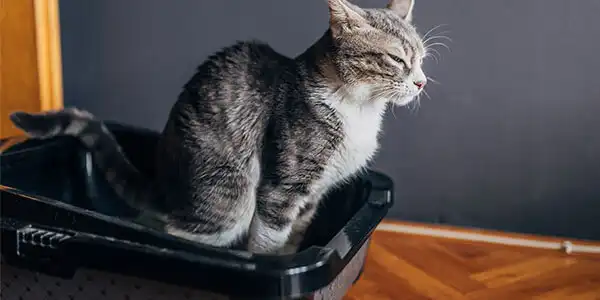
If your cat is having trouble using the litter box (straining to pee, showing signs of pain, going in and out of the box, or you notice blood in their urine), it can be worrying. These symptoms may mean your cat has a condition called feline idiopathic cystitis (FIC).
Although it sounds complicated, FIC is actually a common urinary problem in cats. Understanding what it is and how to manage it can help keep your cat comfortable and healthy.
What Is Feline Idiopathic Cystitis (FIC)?
Feline idiopathic cystitis, also referred to as FIC or feline interstitial cystitis, is one of the most common urinary issues cats face. It causes bladder inflammation, which can lead to pain for your cat.
If left untreated, the inflammation can worsen to the point of causing a urinary tract obstruction. This means your cat can’t urinate, which is a serious medical emergency.
Feline idiopathic cystitis appears to be more common in cats who are:1
- Indoor
- Overweight
- Sedentary
- Living in multi-cat households
- Predisposed to stress and anxiety
You may also hear the term “feline lower urinary tract disease” or FLUDT. This is a complex collection of urinary conditions cats can have, with feline idiopathic cystitis being one of the most common.
Causes of Feline Idiopathic Cystitis
Feline idiopathic cystitis was initially thought to be caused by bacteria, viruses, or stones. Later, it was determined that the real cause was more involved.2
Nerve Inflammation
Current thinking suggests that activation of a nerve causes inflammation, which then triggers the release of chemical messengers that lead to tissue swelling and pain. This is referred to as neurogenic inflammation and pain syndrome.2
Stress Response
Another factor contributing to FIC in cats is a dysfunction of the cat’s stress response system — in other words, a defect in how a cat responds to stress.3
This may be more than simply a cat who’s naturally skittish, but instead the result of abnormalities in the nervous system. Think of it like an imbalance that makes a cat more reactive to stressors.
When the inflammation and stress response are combined, the bladder is the organ that suffers, and FIC is often the result.
The presence of other medical issues may also play a role.
Diet
Diet is another possible factor. Cats on a dry food diet may have a higher risk of developing FIC or having recurrences, but more research is needed to confirm this.4
Signs of Feline Idiopathic Cystitis
The most common clinical signs of FIC in cats are similar to those of other urinary diseases.
- Straining to urinate
- Frequent urination, often in small amounts
- Blood in the urine
- Urinating outside the litter box
- Inability to urinate, especially in male cats (a medical emergency that requires an urgent visit to the veterinary ER)
How Is Feline Idiopathic Cystitis Diagnosed?
There’s no definitive test to diagnose FIC in cats, since the same symptoms are also seen in cats with other urinary diseases. This makes feline idiopathic cystitis a diagnosis of exclusion, meaning all other causes of feline lower urinary tract diseases, such as urinary tract infections, bladder stones, trauma, or cancer, need to be ruled out to end up with a diagnosis of FIC.
Your veterinarian will take a thorough history that includes information about home environment, diet, water intake, litter box setup, grooming habits, behavior changes, etc. A physical examination is another key component in the diagnostic process.
Based on this information, your veterinarian will recommend one or more of the following tests:
- Blood chemistry
- Urinalysis with sediment evaluation (checking for white and red blood cells, crystals, and other features of the urine)
- Urine culture and sensitivity
- Abdominal X-rays
- Abdominal ultrasound
- Bladder biopsy
Based on the results, your veterinarian will formulate a treatment plan.
Treatment for Feline Idiopathic Cystitis
The treatment for FIC in cats includes medical therapy, dietary management, and environmental modifications. The goal is to reduce inflammation, support a lower-anxiety lifestyle, increase hydration, and manage pain. All these treatments work together to get your cat through the flare-up and feeling better.
Medical Therapy
Medical therapy includes pain medications, anti-inflammatories, and anti-spasmodic medications.
For cats with chronic FIC, medical therapy may also include glycosaminoglycan supplementation (a component of the bladder wall), tricyclic antidepressants, and antianxiety medications.
Dietary Management
When cats are well hydrated, the concentration of irritating substances in their urine decreases. This can be achieved by feeding wet cat food or adding water to dry food and encouraging your cat to drink more by using cat water fountains, different bowl styles or materials, varying water temperatures, and even cat-specific flavored additives.
Feeding a specially formulated urinary diet, with antioxidants and omega-3 fatty acids, has been found to reduce flare-ups.5
Multimodal Environmental Modifications (MEMO)
Making changes at home that reduce a cat’s stress can significantly help manage FIC.
- Improved litterbox setup. Use a large, open litter box, unscented litter, and removing waste from the box at least once a day. One cat should have two litter boxes, two cats should have three, etc. so your cat(s) have plenty of options.
- Daily enrichment. Cats have a lot of energy, so regular play throughout the day and bonding time can improve their mood.
- Plenty of environmental resources. Include multiple water stations, perching and climbing areas, toys, scratching posts, and hiding spots to keep your cat’s environment interesting.
- Bonding. If you have other pets, improving relationship issues between your cat and others can reduce their stress.
- Normal routines. Cats thrive with a predictable routine that includes feeding, play, and bedtime.
- Small changes around the house. Big changes can overwhelm cats, so rather than making big changes, like rearranging furniture or moving litter boxes, do so gradually.
These changes revolve around meeting a cat’s instinctual needs. Since you know your cat best, pick and choose which of these might help, or incorporate all of them.
Can Feline Idiopathic Cystitis be Prevented?
While there’s no surefire way to prevent FIC, decrease the risk of flare-ups with proper management, like the tactics above.
Here are some additional ways to reduce stress, which is a huge component of keeping FIC at bay:
- Calming supplements, such as L-tryptophan and alpha-casozepine
- Calming pheromone diffusers and sprays
- Daily interactive play sessions with a wand toy, replicating your cat’s natural hunting process
- Mental enrichment that lets your cat use their taste, vision, hearing, touch, and smell, like food puzzles, treat hunts, and training sessions
Your veterinarian can help you come with a plan that is tailored to your cat’s specific needs, including which food they will thrive on, the best litter for your cat, and even recommend toys that your cat will enjoy.
ZPC-04942

- Chengxi He, et al., Prevalence, Risk Factors, Pathophysiology, Potential Biomarkers and Management of Feline Idiopathic Cystitis: An Update Review. Frontiers in Veterinary Science. 2022 Jun 21. https://pmc.ncbi.nlm.nih.gov/articles/PMC9257190/. Accessed February 2, 2026.
- Feline Idiopathic Cystitis: What Is It and How to Diagnose in Patients. DVM 360. https://www.dvm360.com/view/feline-idiopathic-cystitis-what-it-is-and-how-to-diagnose-in-patients. Accessed July 8, 2025.
- Idiopathic Cystitis in Cats. Veterinary Partner. https://veterinarypartner.vin.com/default.aspx?pid=19239&id=4951488. Accessed July 8, 2025.
- Anton Beynen. Diet and feline idiopathic cystitis. July 2019. Dier-en-Arts 2016; Nr 1/2: 18-21. https://www.researchgate.net/publication/334760767_Diet_and_feline_idiopathic_cystitis.
- John M Kruger, et. al. Comparison of foods with differing nutritional profiles for long-term management of acute nonobstructive idiopathic cystitis in cats. Sept. 1, 2015. PMID: 26295556 DOI: 10.2460/javma.247.5.508