Living with a dog brings joy, adventure, and companionship. But being a responsible pet parent means handling all aspects of dog ownership — including how to dispose of dog waste. Proper dog waste disposal isn’t just about keeping your shoes clean; it’s essential for protecting your community’s health, the environment, and your home’s cleanliness.
Here are helpful tips for your dog's waste disposal options so you can ensure that you're being a responsible dog owner and good neighbor.
How to Dispose of Dog Poop on Walks
When you're out and about with your dog, always bring poop bags. Choose biodegradable bags for better dog waste disposal or reuse old grocery bags. After your dog does their business, flip the bag inside out and use it like a glove to pick up the waste. Invert the bag and tie it off securely.
Trash Bins & Waste Stations
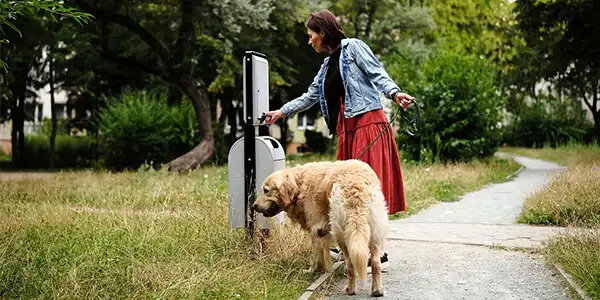
For disposing of full poop bags during walks, your best option is to use public trash bins or dog waste stations. Waste stations are specifically designed for effective dog waste management and are usually stocked with free bags. They make it easy to keep public spaces clean.
Just drop the tied-off bag into the bin, and you're good to go.
Don’t leave bags by the roadside or toss them in a neighbor’s bin without permission. It’s not only impolite but also harmful to the environment. Leaving dog waste unattended is bad for the environment and your community.
How to Install a Waste Station
If you'd like to have a dog waste station installed in your neighborhood or along your usual walking route, contact your local city or country about rules and availability. Often, they are only able to install these on public property. Sometimes neighborhood HOAs will invest in waste stations as well, so it's worth asking your neighbors.
Dog Waste Disposal at Home
In your own backyard, the options for dealing with your dog's poo vary slightly. You have a choice between regular disposal, composting, and waste digester systems.
Regular Disposal
This is just like how you'd dispose of waste during a walk. Collect the waste in a bag and place it in a designated trash can (kept outdoors) to prevent the odor from wafting into your home. While flushing dog poop down the toilet gets rid of it easily, it's generally not recommended due to the possibility of parasites that could survive the water treatment process.
Composting
Composting dog waste can be an eco-friendly option, but it requires careful management to prevent harmful bacteria from contaminating the environment. Never use this compost on plants or crops meant for human consumption. It's best to use composters designed specifically for pet waste.
Waste Digester Systems
These in-ground systems use enzymes and bacteria to break down dog waste underground. Waste digester systems are a modern solution for dog waste disposal at home.
Dangers of Improper Dog Waste Disposal
Improper cleanup of your pup's waste can have significant impacts on other pets, wildlife, and people. Your dog's poop can contain harmful bacteria, such as E.coli, salmonellosis, giardia, and campylobacteriosis, as well as parasites, such as roundworms and hookworms. If other animals or people, especially children and immunocompromised individuals, come into contact with your dog's poop, it's possible they could develop a serious infection.
Best Practices for Dog Waste Management
Regardless of the method you choose, there are several best practices you should follow for dealing with your dog's waste:
- Always clean up after your dog. It's not just considerate; it's often a legal requirement, depending on your local laws.
- Don't compost dog waste for edible gardens. The risk of contamination is too high.
- Consider biodegradable bags. This reduces the amount of plastic ending up in landfills.
- Wash your hands. Handling dog waste, even with a bag, can spread germs.
Proper dog waste disposal keeps your community safe, your yard clean, and the environment protected. Whether you use waste stations, composters, or digester systems, you’re making a positive impact. With the right tools and habits, dog waste management is simple and effective. A little effort ensures happy walks, healthy yards, and a cleaner world for everyone.
ZPC-05114